
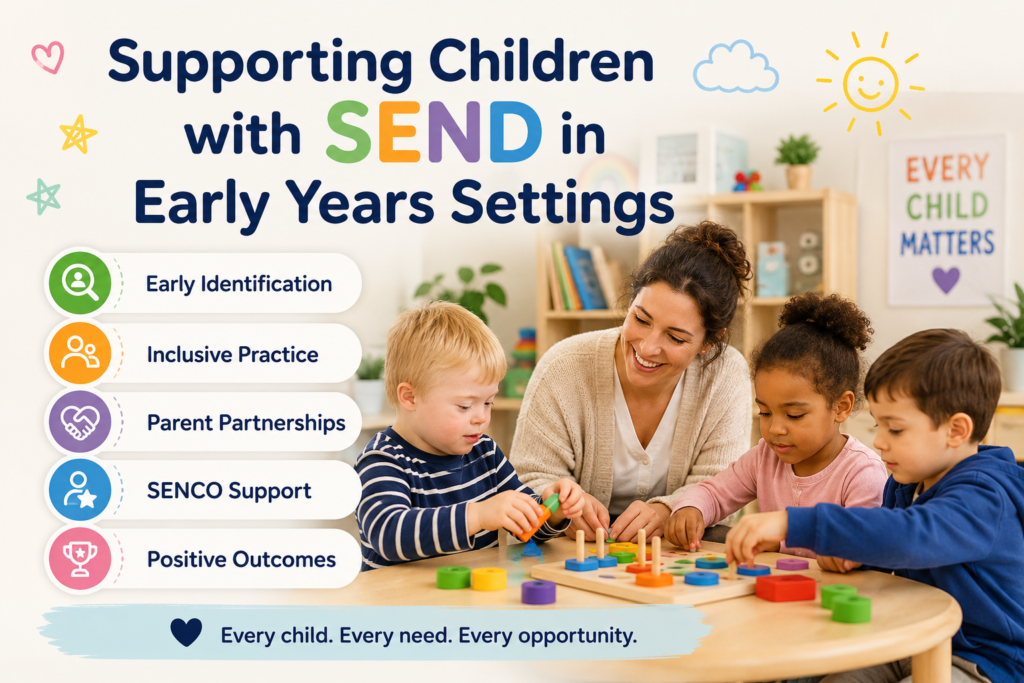
Children with Special Educational Needs and Disabilities (SEND) have the right to access high-quality early education and support. Early years providers play an important role in identifying needs early, working with families and creating inclusive learning environments.
By providing appropriate support and adapting practice, settings can help every child reach their full potential.
What Does SEND Mean?
SEND refers to children who have learning difficulties or disabilities that require additional support to access learning and development opportunities.
Areas of need may include:
- Communication and interaction
- Cognition and learning
- Social, emotional and mental health
- Sensory and physical needs
Early Identification
Early identification helps children receive support as soon as possible.
Practitioners should:
- Observe children’s development regularly
- Monitor progress against EYFS expectations
- Discuss concerns with parents sensitively
- Seek additional advice when appropriate
Creating an Inclusive Environment
Inclusive practice benefits all children.
Providers can support inclusion by:
- Adapting activities to meet individual needs
- Using visual aids and communication tools
- Providing accessible learning resources
- Encouraging positive relationships and friendships
Working with Parents and Professionals
Strong partnerships help ensure consistent support.
Settings should:
- Share observations and progress regularly
- Involve parents in planning next steps
- Work with SENCOs and external professionals
- Follow agreed support plans
The Role of the SENCO
Every early years setting should have access to a Special Educational Needs Coordinator (SENCO).
The SENCO helps:
- Coordinate support for children with SEND
- Advise staff on inclusive practice
- Liaise with families and professionals
- Monitor children’s progress
What Ofsted May Look For
During inspections, Ofsted may consider:
- How effectively children with SEND are supported
- Whether individual needs are identified early
- How staff adapt teaching and learning
- Partnerships with parents and professionals
- Children’s progress and wellbeing
Best Practice Tips
- Promote an inclusive culture throughout the
- setting Use clear communication strategies
- Review support plans regularly
- Celebrate every child’s achievements
- Ensure staff receive SEND training
Conclusion
Supporting children with SEND is a key part of high-quality early years practice. By identifying needs early, working collaboratively and providing inclusive learning opportunities, settings can help children thrive and achieve positive outcomes.