
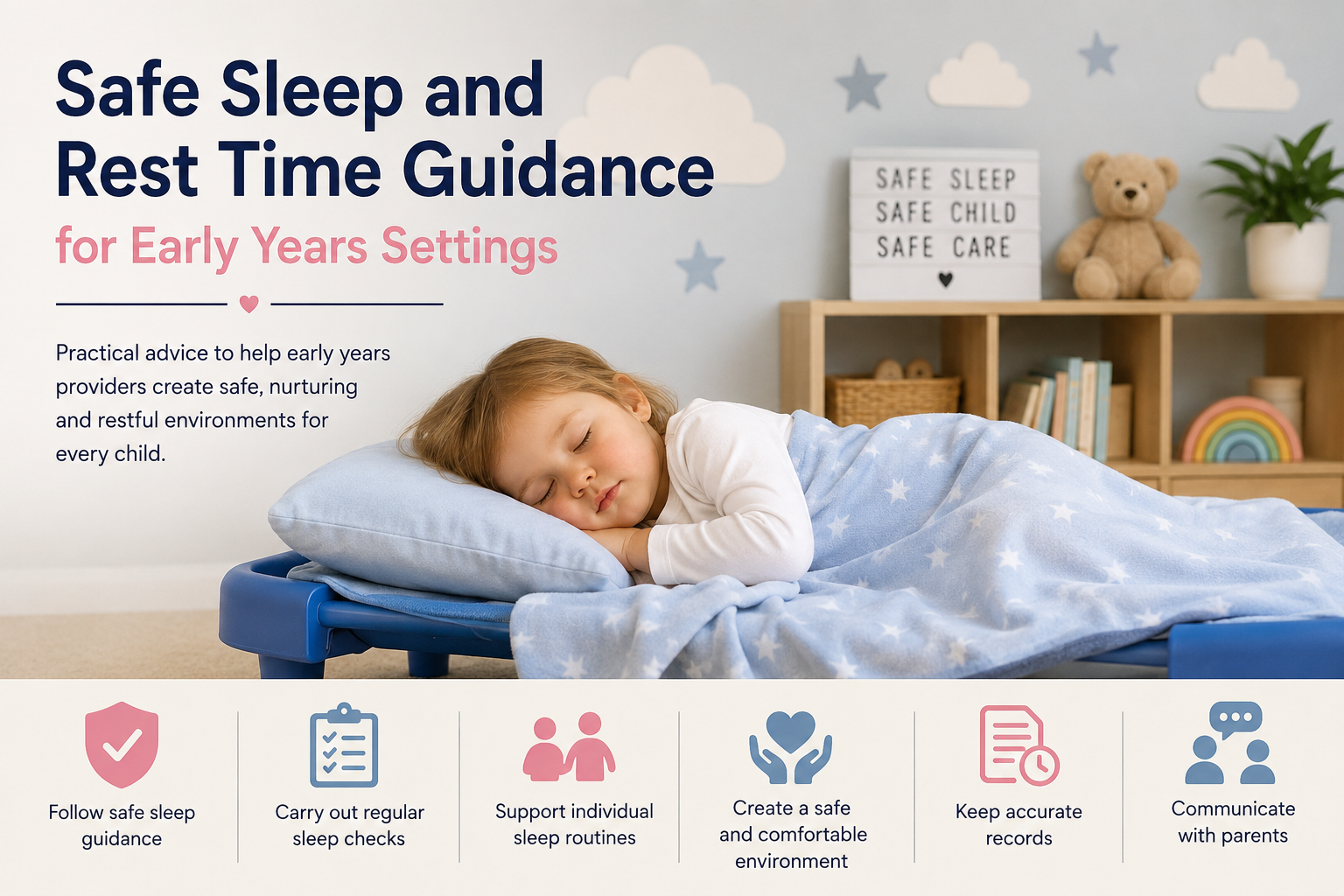
Sleep and rest are essential for children’s health, wellbeing and development. Early years settings have a responsibility to ensure that sleep arrangements are safe, appropriate and meet the individual needs of every child.
Inspectors may consider how settings manage sleep routines, supervise sleeping children and maintain accurate records. Having clear procedures helps providers create a safe and nurturing environment while giving parents confidence that their children are well cared for.
This guide explains key safe sleep principles and practical steps that early years providers can follow.
Safe Sleep Procedures
Early years providers should have clear sleep procedures that are understood by all staff. Sleep areas should be safe, comfortable and regularly checked. Babies should be placed on their backs to sleep unless parents have provided alternative medical advice.
Staff should ensure that children are appropriately dressed, that bedding is suitable and that sleep environments are free from hazards. Safe sleep guidance should be reviewed regularly and shared with parents.
Sleep Checks and Monitoring
Children should be supervised while sleeping and regular sleep checks should be carried out. Records should show the time children fall asleep, the checks completed and when they wake up.
Regular monitoring helps staff respond quickly if a child becomes unwell or requires assistance. Accurate records also demonstrate good practice and support communication with parents.
Individual Sleep Routines
Every child has different sleep needs. Early years settings should work closely with parents to understand individual routines, comforters and sleep preferences.
Respecting children’s individual needs helps promote wellbeing and ensures that sleep arrangements are consistent between home and the setting.
What Ofsted May Look For
During inspections, Ofsted may consider how effectively children are supervised during sleep and rest periods. Inspectors may look at sleep policies, staff knowledge, risk assessments and sleep check records.
They may also consider whether children’s individual needs are respected and how settings communicate with parents about sleep routines and wellbeing.
Best Practice Tips
- Follow current safe sleep guidance and review policies regularly.
- Carry out and record regular sleep checks.
- Ensure staff understand their responsibilities during sleep times.
- Maintain a safe and comfortable sleep environment.
- Work closely with parents to support individual sleep routines.
- Keep accurate records of sleep times and checks completed.
Conclusion
Providing safe and effective sleep arrangements is an important part of high-quality early years practice. Clear procedures, regular monitoring and strong communication with parents help ensure children remain safe, comfortable and well supported.
By following safe sleep guidance and maintaining accurate records, early years providers can demonstrate good practice and be well prepared for inspection.