
Introduction
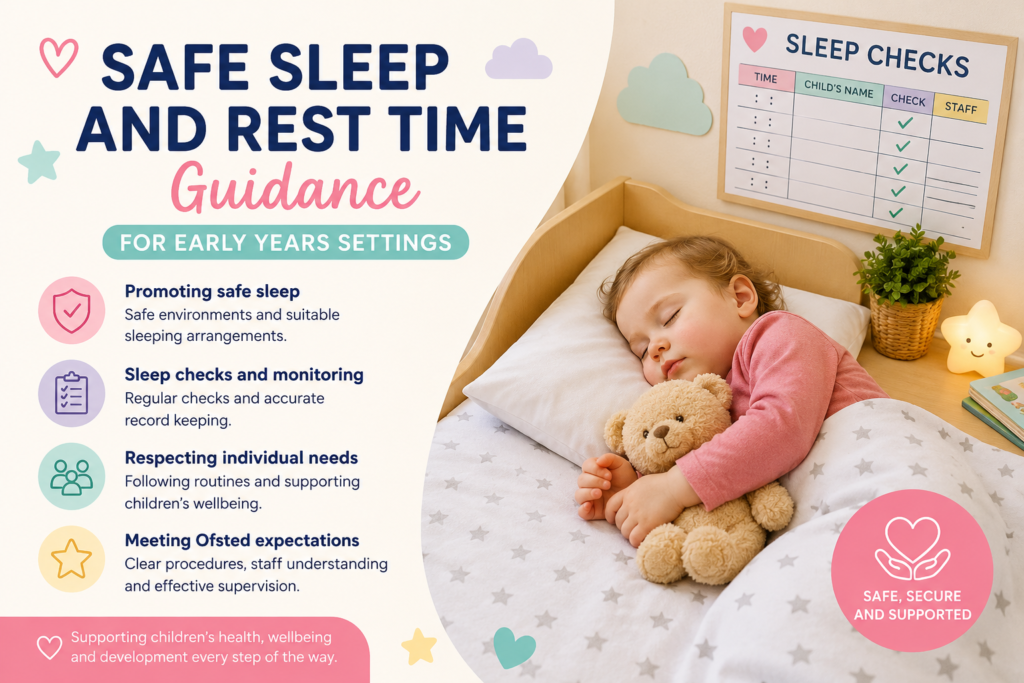
Sleep and rest are essential for children’s health, wellbeing and development. Early years settings must ensure that sleep arrangements are safe, suitable and meet each child’s individual needs. Having clear procedures helps protect children and supports compliance with safeguarding and welfare requirements.
Why Sleep and Rest Matter
Children need adequate sleep to support:
- Physical growth and development
- Emotional wellbeing
- Learning and concentration
- Behaviour regulation
- Overall health
Early years practitioners should work closely with parents to understand each child’s sleep routine and preferences.
Safe Sleep Practices
To promote safe sleep:
- Babies should be placed on their backs to sleep.
- Sleep areas should be clean, safe and well supervised.
- Bedding should be appropriate for the child’s age.
- Children should not be overheated.
- Sleep equipment should be regularly checked for safety.
Sleep Checks and Monitoring
Settings should:
- Carry out regular sleep checks.
- Record checks according to the setting’s policy.
- Ensure sleeping children remain visible or are monitored appropriately.
- Keep accurate records of sleep times and checks.
Respecting Individual Needs
Every child is different. Practitioners should:
- Follow agreed routines with parents.
- Consider medical conditions and additional needs.
- Support children who no longer sleep but still require rest time.
- Create a calm and comfortable environment.
What Ofsted May Look For
Inspectors may consider:
- Safe sleep procedures.
- Staff understanding of sleep guidance.
- Sleep check records.
- Supervision arrangements.
- How individual needs are met.
Conclusion
Effective sleep and rest procedures help keep children safe and support their wellbeing. By following safe sleep guidance, maintaining supervision and respecting individual routines, early years settings can provide a nurturing environment that promotes healthy development.