
Introduction
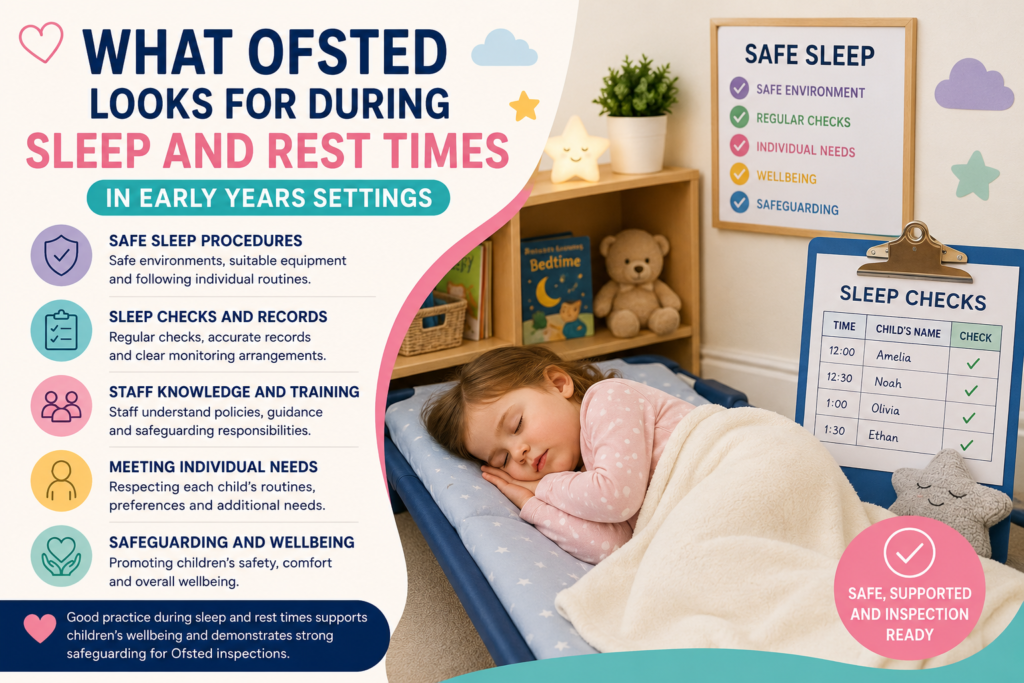
Sleep and rest are important parts of children’s health, wellbeing and development. Early years settings must ensure that children are supervised appropriately, sleep arrangements are safe and individual needs are respected. During inspections, Ofsted may look at how settings manage sleep and rest times as part of their wider assessment of safeguarding, care and children’s wellbeing.
Why Sleep and Rest Times Matter
Children need adequate sleep and opportunities for rest to support healthy growth, emotional wellbeing and learning. Effective sleep arrangements help children feel secure, comfortable and ready to engage in activities throughout the day.
Settings should work closely with parents to understand each child’s sleep routine and preferences, ensuring that care remains consistent between home and the setting.
Safe Sleep Procedures
Ofsted expects settings to have clear procedures for sleep and rest times. Staff should understand safe sleep guidance and follow the setting’s policies consistently.
Good practice includes:
- Providing a safe and suitable sleeping environment.
- Using age-appropriate sleep equipment.
- Ensuring children are comfortable and not overheated.
- Maintaining a clean and well-supervised sleep area.
- Following individual sleep routines agreed with parents.
Sleep Checks and Monitoring
Regular sleep checks are an important part of safeguarding.
Settings should:
- Carry out sleep checks at agreed intervals.
- Record sleep checks accurately.
- Ensure sleeping children remain visible or appropriately monitored.
- Maintain clear records of sleep times and checks.
- Respond promptly if concerns arise.
Accurate records demonstrate that children are being monitored safely and consistently.
Staff Knowledge and Training
Inspectors may ask staff questions about sleep procedures and safeguarding responsibilities.
Staff should be able to explain:
- The setting’s sleep policy.
- How sleep checks are carried out.
- Safe sleep guidance for babies and young children.
- How concerns would be reported.
- How individual children’s needs are supported.
Regular training helps ensure that all staff understand their responsibilities.
Respecting Individual Children’s Needs
Every child is different. Some children may require longer sleep periods, while others may only need quiet rest time.
Settings should:
- Follow information provided by parents.
- Respect children’s individual routines.
- Consider medical conditions or additional needs.
- Provide suitable alternatives for children who no longer sleep.
- Create a calm and comfortable environment.
Inspectors may look at how well staff understand and meet individual needs.
Common Issues Ofsted May Identify
Examples of concerns may include:
- Incomplete sleep check records.
- Staff being unclear about sleep procedures.
- Inadequate supervision arrangements.
- Failure to follow agreed routines.
- Unsafe sleep environments.
Addressing these areas helps ensure children’s safety and wellbeing.
What Good Practice Looks Like
Strong practice includes:
- Clear sleep and rest policies.
- Consistent monitoring and record keeping.
- Well-trained staff.
- Good communication with parents.
- Individualised care for every child.
- Safe and comfortable sleep environments.
These approaches support both safeguarding and positive outcomes for children.
Conclusion
Sleep and rest times are an important part of high-quality early years provision. By following safe sleep guidance, maintaining effective supervision and respecting children’s individual needs, settings can provide a safe and nurturing environment that supports children’s wellbeing and development. Good practice during sleep and rest times also helps demonstrate strong safeguarding arrangements during an Ofsted inspection.