
Introduction
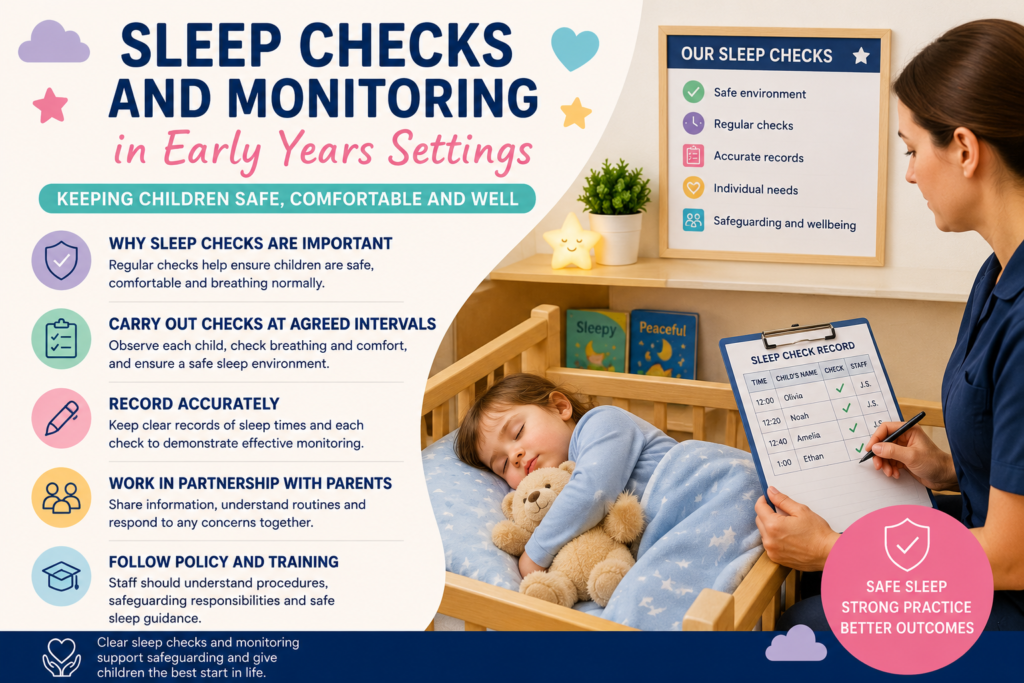
Sleep and rest periods are an important part of the daily routine in many early years settings. Effective sleep checks help ensure that children remain safe, comfortable and well supervised while resting. Clear monitoring procedures also support safeguarding requirements and provide reassurance to parents.
Why Sleep Checks Are Important
Children can be vulnerable while sleeping. Regular checks help practitioners ensure that children are safe and comfortable throughout their rest period.
Sleep checks help staff to:
- Monitor children’s wellbeing.
- Ensure children are breathing normally.
- Check comfort and temperature levels.
- Identify concerns quickly.
- Maintain a safe sleeping environment.
Consistent monitoring is an important part of safeguarding practice.
Creating a Safe Sleep Environment
Before children sleep, practitioners should ensure that:
- Sleep equipment is safe and suitable.
- Bedding is clean and appropriate.
- Rooms are well ventilated.
- Children are comfortable and not overheated.
- Sleeping areas are free from hazards.
A calm and safe environment promotes quality rest and wellbeing.
Carrying Out Sleep Checks
Settings should follow their sleep policy and carry out checks at agreed intervals.
Practitioners should:
- Observe each sleeping child.
- Check breathing and comfort.
- Ensure children remain in a safe position.
- Monitor room conditions.
- Respond promptly to any concerns.
Checks should be completed quietly to avoid disturbing sleeping children.
Recording Sleep Checks
Accurate records provide evidence that children are being monitored appropriately.
Records may include:
- Child’s name.
- Time asleep.
- Time of each sleep check.
- Staff member completing the check.
- Time awake.
- Any observations or concerns.
Good record keeping supports safeguarding and inspection readiness.
Working with Parents
Parents should be informed about sleep arrangements within the setting.
Practitioners should:
- Discuss children’s sleep routines.
- Record parental preferences.
- Share information about sleep patterns.
- Report any concerns promptly.
Partnership working helps provide consistent care for children.
What Ofsted May Look For
During an inspection, Ofsted may consider:
- Sleep check records.
- Staff understanding of procedures.
- Supervision arrangements.
- Safe sleep practices.
- How individual needs are supported.
Inspectors may ask staff to explain how sleep checks are carried out and recorded.
Common Mistakes to Avoid
Settings should avoid:
- Missing sleep checks.
- Incomplete records.
- Poor supervision arrangements.
- Lack of staff training.
- Failure to follow individual routines.
Regular reviews help maintain high standards of practice.
Conclusion
Effective sleep checks and monitoring procedures help keep children safe and support their wellbeing. By maintaining accurate records, following clear procedures and working closely with parents, early years settings can provide safe and nurturing rest environments while demonstrating strong safeguarding practice.