
Introduction
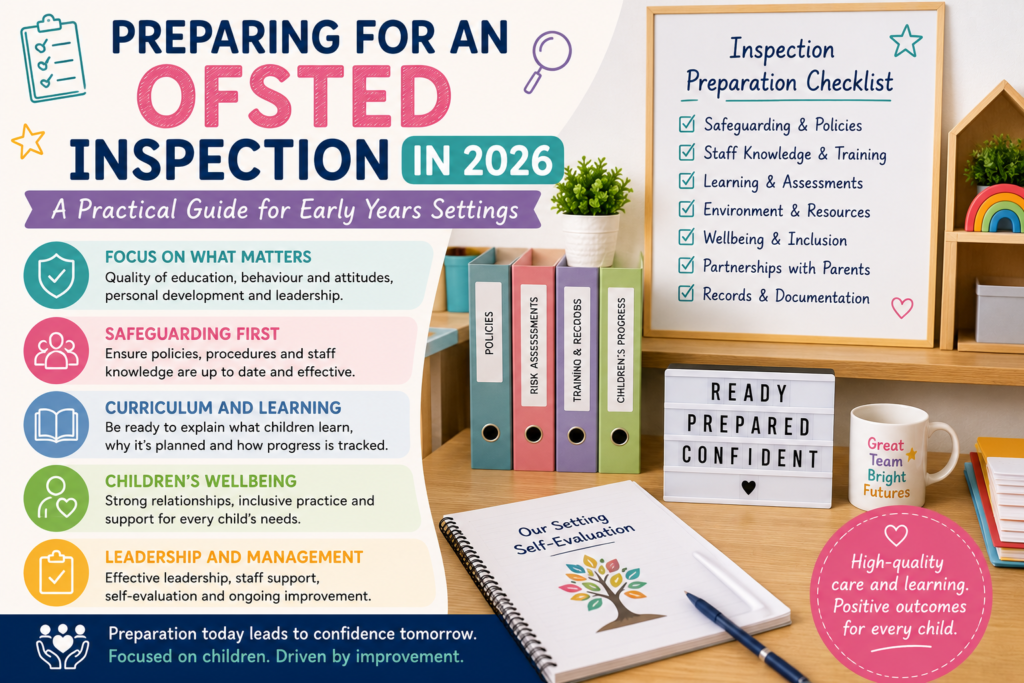
Ofsted inspections play an important role in ensuring that children receive high-quality education, care and support. Being well prepared can help staff feel confident and demonstrate the strengths of their setting. This guide highlights key areas that inspectors may focus on and provides practical tips to help settings prepare.
Understanding the Inspection Process
An Ofsted inspection looks at the quality of education, leadership and management, behaviour and attitudes, and children’s personal development. Inspectors aim to understand what it is like for children attending the setting.
Preparation should be an ongoing process rather than something that only happens when an inspection is announced.
Curriculum and Learning
Inspectors will want to understand:
- What children are learning.
- Why activities have been planned.
- How staff support children’s development.
- How progress is monitored.
Practitioners should be confident in explaining how activities help children learn and develop.
Safeguarding
Safeguarding remains a key priority during inspections.
Inspectors may check:
- Safeguarding policies.
- Staff knowledge of procedures.
- Recruitment records.
- Risk assessments.
- Child protection arrangements.
All staff should know how to recognise and report concerns.
Leadership and Management
Strong leadership helps create a positive environment for children and staff.
Inspectors may look at:
- Staff supervision and support.
- Training opportunities.
- Self-evaluation processes.
- Improvement plans.
- Partnerships with parents.
Leaders should be able to explain how they maintain quality and drive improvement.
Supporting Children’s Wellbeing
Children should feel safe, secure and valued.
Inspectors may observe:
- Relationships between staff and children.
- Behaviour management approaches.
- Emotional wellbeing support.
- Inclusive practice.
- Care routines.
Positive interactions are often a strong indicator of quality provision.
Documentation and Records
Ensure important records are up to date, including:
- Policies and procedures.
- Risk assessments.
- Staff training records.
- Accident and incident records.
- Attendance records.
Good organisation helps demonstrate effective management.
Common Inspection Questions
Staff may be asked:
- How do you keep children safe?
- What are children learning?
- How do you support individual needs?
- How do you work with parents?
- What improvements have you made recently?
Regular discussions with staff can help build confidence.
Final Preparation Checklist
Before an inspection:
- Review safeguarding procedures.
- Update key records.
- Check staff knowledge.
- Ensure learning environments are organised.
- Celebrate strengths and achievements.
Conclusion
Successful inspection preparation is about maintaining high standards every day. By focusing on children’s learning, wellbeing and safety, settings can confidently demonstrate the quality of their provision and achieve positive outcomes during an Ofsted inspection.