
Introduction
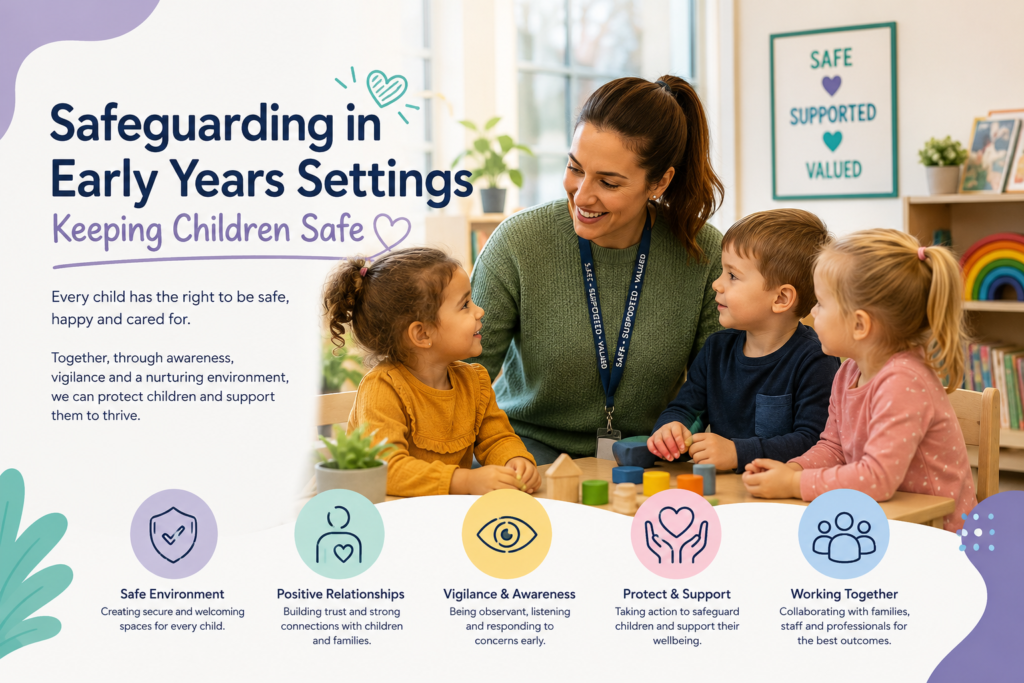
Safeguarding is one of the most important responsibilities in early years settings. Every child has the right to feel safe, protected and supported in an environment where they can learn and develop confidently.
Early years practitioners have a duty to remain vigilant, recognise concerns and take appropriate action to protect children from harm. Effective safeguarding is not only about responding to concerns but also about creating a culture where children’s wellbeing and safety are always the highest priority.
Understanding Safeguarding
Safeguarding involves protecting children from abuse, neglect, harm and exploitation while promoting their health, wellbeing and development.
A strong safeguarding culture includes:
- A safe and secure learning environment
- Positive relationships with children
- Clear safeguarding policies and procedures
- Regular staff training and professional development
- Effective communication between staff, parents and other professionals
Every member of staff must understand their role in keeping children safe.
Recognising Signs of Abuse and Neglect
Children may not always be able to tell adults when something is wrong, so practitioners must be aware of possible signs of concern.
Physical Abuse
Physical abuse may involve causing physical harm to a child. Possible indicators include:
- Unexplained injuries or frequent bruising
- Injuries with unusual patterns
- Fear of going home or being around certain individuals
- Flinching when approached suddenly
Emotional Abuse
Emotional abuse can affect a child’s confidence and emotional development. Signs may include:
- Extreme withdrawal or anxiety
- Low self-esteem
- Excessive fear of making mistakes
- Delayed emotional development
Sexual Abuse
Sexual abuse involves forcing or encouraging a child to take part in sexual activities.
Possible indicators may include:
- Age-inappropriate sexual knowledge or behaviour
- Sudden changes in behaviour
- Fear of specific people or places
- Regression to earlier behaviours, such as bedwetting
Neglect
Neglect is the ongoing failure to meet a child’s basic physical and emotional needs.
Possible signs include:
- Poor hygiene
- Inappropriate clothing for the weather
- Frequent hunger or tiredness
- Lack of appropriate medical care
- Poor attendance or regular lateness
The Role of the Designated Safeguarding Lead (DSL)
Every early years setting must have a Designated Safeguarding Lead (DSL) who takes responsibility for managing safeguarding concerns.
The DSL’s responsibilities include:
- Providing advice and support to staff
- Managing safeguarding records
- Making referrals to relevant services when required
- Ensuring safeguarding policies are followed
- Keeping safeguarding knowledge up to date
All staff must know who their DSL is and how to report concerns immediately.
Recording and Reporting Concerns
Accurate record keeping is an essential part of safeguarding.
Practitioners should:
- Record concerns factually and promptly
- Use the child’s own words where appropriate
- Include dates, times and observations
- Avoid personal opinions or assumptions
- Follow the setting’s safeguarding procedures
Concerns should always be shared with the DSL without delay.
Safer Working Practices
Maintaining professional conduct helps protect both children and practitioners.
Good practice includes:
- Maintaining appropriate professional boundaries
- Following intimate care procedures
- Supervising children appropriately
- Using mobile phones and cameras according to policy
- Following online safety and digital safeguarding guidance
Supporting Children’s Emotional Safety
Children feel secure when they have warm, trusting relationships with familiar adults.
Practitioners can support emotional wellbeing by:
- Listening to children carefully
- Respecting their feelings
- Encouraging children to express emotions
- Creating an inclusive and welcoming environment
- Promoting positive relationships between children
Working in Partnership with Parents and Other Professionals
Strong communication between settings, families and professionals helps provide consistent support for children.
Practitioners should:
- Build respectful relationships with families
- Share appropriate information when needed to safeguard children
- Work alongside health visitors, social workers and other professionals
- Ensure the child’s welfare remains the main priority
What Ofsted May Look For
During an inspection, Ofsted may consider:
- Staff understanding of safeguarding procedures
- Knowledge of signs and indicators of abuse and neglect
- Confidence in reporting concerns
- The effectiveness of the DSL
- Accurate safeguarding records
- Staff training and safer working practices
- Whether children feel safe and supported
Conclusion
Effective safeguarding is the foundation of high-quality early years practice. By maintaining strong policies, developing knowledgeable staff and creating a caring environment, settings can ensure that every child is protected, valued and given the opportunity to thrive.
Safeguarding is everyone’s responsibility, and a strong safeguarding culture helps children feel safe, secure and ready to learn.