
Introduction
Technology is now a regular part of children’s lives from an early age. Many young children use tablets, smartphones, interactive toys, smart televisions, and online learning platforms both at home and within Early Years settings. While technology can provide valuable learning opportunities, it also presents potential risks that children may not fully understand.
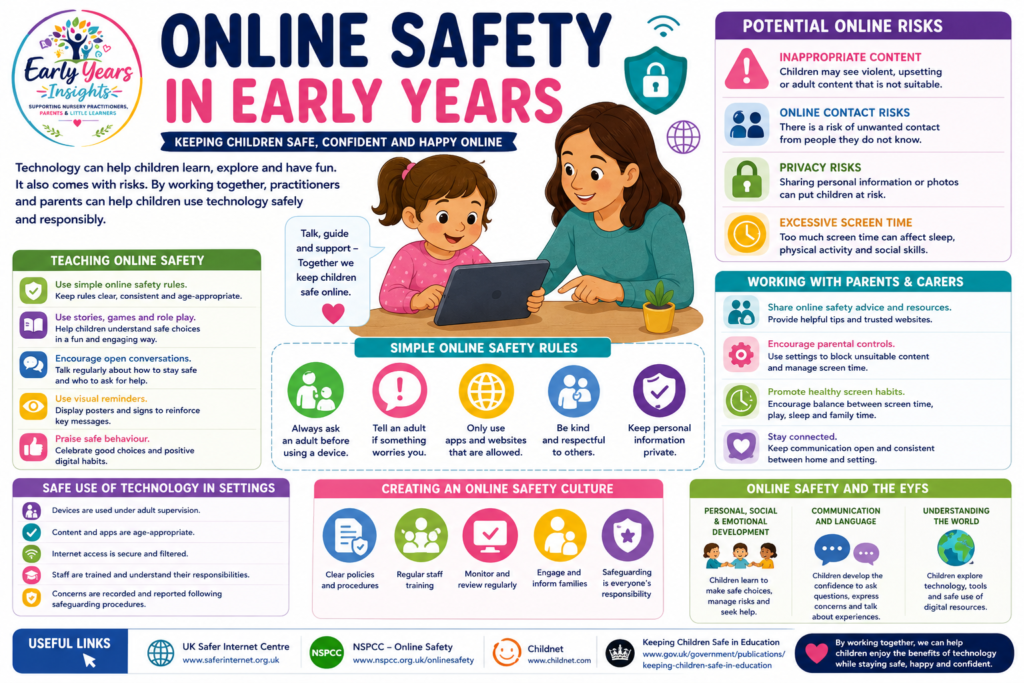
Online safety in Early Years is about helping children use technology safely, responsibly, and appropriately while supporting their overall wellbeing and development. Practitioners and parents share an important responsibility in creating safe digital experiences and teaching children the foundations of safe online behaviour.
This guide explores the importance of online safety in Early Years, common online risks, and practical strategies to support young children in today’s digital world.
What Is Online Safety in Early Years?
Online safety refers to protecting children when using digital devices, the internet, and online services. It involves helping children understand how to stay safe, make good choices, and seek support if something makes them feel worried or uncomfortable.
For young children, online safety is closely linked to safeguarding. Just as practitioners teach children how to stay safe in the physical world, they should also help children develop awareness of safety in digital environments.
Online safety includes:
- Safe use of tablets and computers
- Understanding personal information
- Accessing age-appropriate content
- Developing healthy screen habits
- Learning how to seek help when needed
Why Online Safety Matters for Young Children
Children are accessing technology at increasingly younger ages. Although young children may use devices under adult supervision, they can still encounter risks if appropriate safeguards are not in place.
Promoting online safety helps children:
- Develop safe digital habits
- Build confidence when using technology
- Recognise trusted adults who can help them
- Understand basic privacy and safety concepts
- Enjoy positive online experiences
By introducing online safety concepts early, practitioners and parents can help establish foundations that support children’s long-term digital wellbeing.
Potential Online Risks for Young Children
Inappropriate Content
Children may accidentally access content that is unsuitable for their age and stage of development.
Examples include:
- Violent material
- Distressing news stories
- Adult content
- Frightening images or videos
Using parental controls, filtering systems, and supervised access can help reduce these risks.
Online Contact Risks
Although young children typically have limited independent online interactions, there remains a risk of unwanted contact through games, apps, or online platforms.
Children should be taught that they should only communicate online with trusted adults and that they should always tell an adult if something feels wrong.
Privacy and Personal Information
Young children may not understand that personal information should be kept private.
Examples include:
- Full names
- Home addresses
- School or nursery details
- Family information
- Photographs
Adults should model safe online behaviour and help children understand the importance of privacy.
Excessive Screen Time
Technology can support learning, but excessive screen use may impact:
- Sleep patterns
- Physical activity
- Social interactions
- Attention and concentration
Balanced use of technology alongside active play and face-to-face experiences is important for healthy development.
Teaching Online Safety in Early Years
Online safety learning should be age-appropriate, practical, and linked to children’s everyday experiences.
Use Simple Online Safety Rules
Children benefit from clear and consistent messages.
Examples include:
- Always ask an adult before using a device.
- Tell an adult if something worries you.
- Only use approved websites and apps.
- Be kind when communicating online.
Story-Based Learning
Stories provide opportunities to explore online safety concepts in child-friendly ways.
Practitioners can use books and discussions to help children understand:
- Making safe choices
- Asking for help
- Respecting others
- Managing feelings
Circle Time Discussions
Circle time can encourage children to share experiences and discuss technology use in a safe environment.
Topics may include:
- Favourite educational apps
- Using devices safely
- Asking trusted adults for help
- Understanding screen time limits
Visual Reminders
Simple visual displays can reinforce online safety messages.
Examples include:
- Online safety posters
- Device rules displays
- Trusted adult visuals
- Safe internet symbols
Role Play Activities
Role play helps children practise responses to different situations.
Scenarios might include:
- Asking permission before using a device
- Telling an adult about something upsetting
- Making safe choices online
Safe Use of Technology in Early Years Settings
Technology should be used purposefully and safely within Early Years environments.
Supervised Device Use
Children should always use internet-connected devices under appropriate adult supervision.
Age-Appropriate Content
Resources should be carefully selected to ensure they are suitable for children’s developmental stage and learning needs.
Secure Internet Access
Settings should use:
- Filtering systems
- Secure Wi-Fi networks
- Approved educational platforms
- Regularly updated software
Staff Responsibilities
Practitioners should understand:
- Online safety policies
- Safeguarding procedures
- Appropriate technology use
- Reporting concerns
Regular staff training helps maintain a strong culture of online safety.
Working in Partnership with Parents and Carers
Online safety is most effective when settings and families work together.
Share Practical Guidance
Settings can support families by providing information about:
- Safe apps and websites
- Screen time recommendations
- Parental controls
- Digital wellbeing
Encourage Open Conversations
Parents should be encouraged to discuss technology use with children regularly.
Simple questions such as:
- What did you watch today?
- What games did you play?
- Did anything make you feel worried?
can help maintain open communication.
Promote Consistent Messages
Children benefit when home and setting expectations align.
Consistent messages around safety, kindness, and responsible technology use help children develop positive habits.
Creating an Online Safety Culture
Online safety should form part of a wider safeguarding culture.
Effective settings:
- Have clear online safety policies
- Provide regular staff training
- Monitor technology use
- Engage parents and carers
- Review procedures regularly
Online safety is everyone’s responsibility and should be embedded throughout daily practice.
Online Safety and the EYFS Framework
Online safety supports several areas of learning and development within the EYFS.
Personal, Social and Emotional Development
Children learn to:
- Make safe choices
- Manage risks
- Build confidence
- Seek help when needed
Communication and Language
Children develop skills to:
- Express concerns
- Ask questions
- Discuss experiences
Understanding the World
Children explore:
- Technology
- Digital tools
- Safe use of online resources
These experiences help children develop the knowledge and skills needed to navigate an increasingly digital world.
Frequently Asked Questions
What is online safety in Early Years?
Online safety involves helping children use technology safely, responsibly, and appropriately while protecting them from potential online risks.
Why is online safety important for young children?
Young children are using digital devices more frequently. Online safety helps protect them from inappropriate content, privacy risks, and unsafe online experiences.
How can practitioners teach online safety?
Practitioners can use stories, discussions, role play, visual reminders, and everyday conversations to introduce simple online safety messages.
What role do parents play in online safety?
Parents play a key role by supervising technology use, encouraging open conversations, using parental controls, and modelling safe online behaviour.
Is online safety part of safeguarding?
Yes. Online safety is an important aspect of safeguarding and helps protect children from harm in digital environments.
Key Takeaways
✔ Online safety is an important part of safeguarding in Early Years.
✔ Children should learn simple safety messages from an early age.
✔ Technology should be used safely, purposefully, and under supervision.
✔ Practitioners and parents should work together to promote safe digital habits.
✔ Positive online experiences help children develop confidence and digital awareness.
Conclusion
Technology is an important part of modern childhood and can provide valuable opportunities for learning, creativity, and communication. However, young children need guidance, support, and protection to use technology safely.
By promoting online safety through everyday practice, strong safeguarding procedures, and effective partnerships with parents and carers, Early Years settings can help children develop the knowledge, confidence, and skills needed to navigate the digital world safely and responsibly.
Useful Online Safety Resources
- Practitioners can access guidance from the UK Safer Internet Centre.
- Parents can find practical support through the NSPCC Online Safety section.
- Educational resources are available from Childnet.
- Safeguarding responsibilities are outlined in Keeping Children Safe in Education.
- Early Years requirements can be found in the EYFS Statutory Framework.