
Introduction
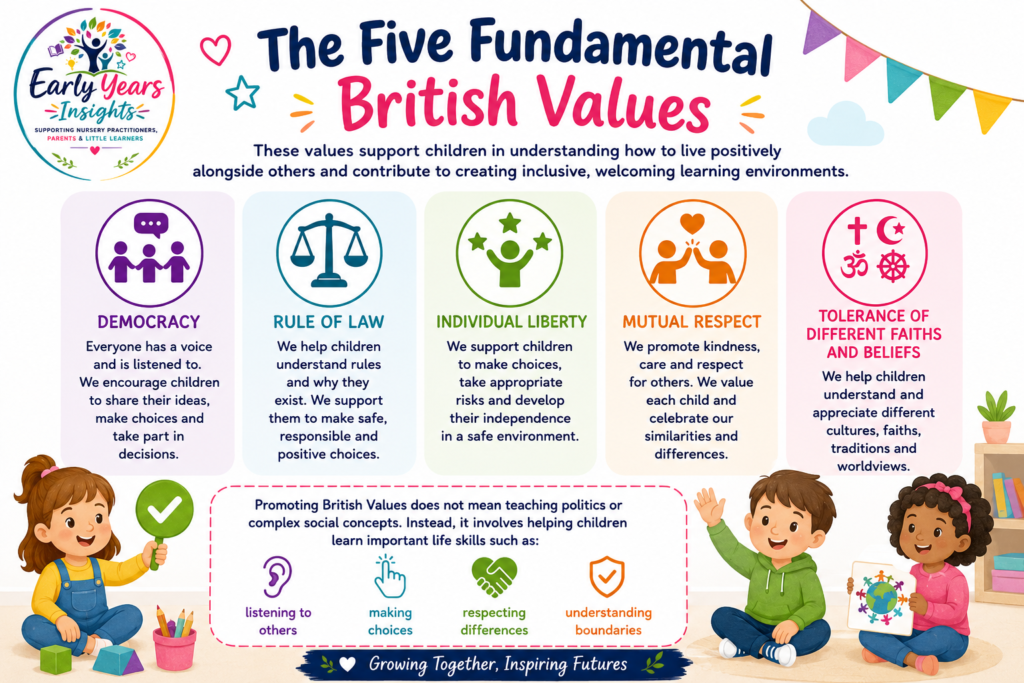
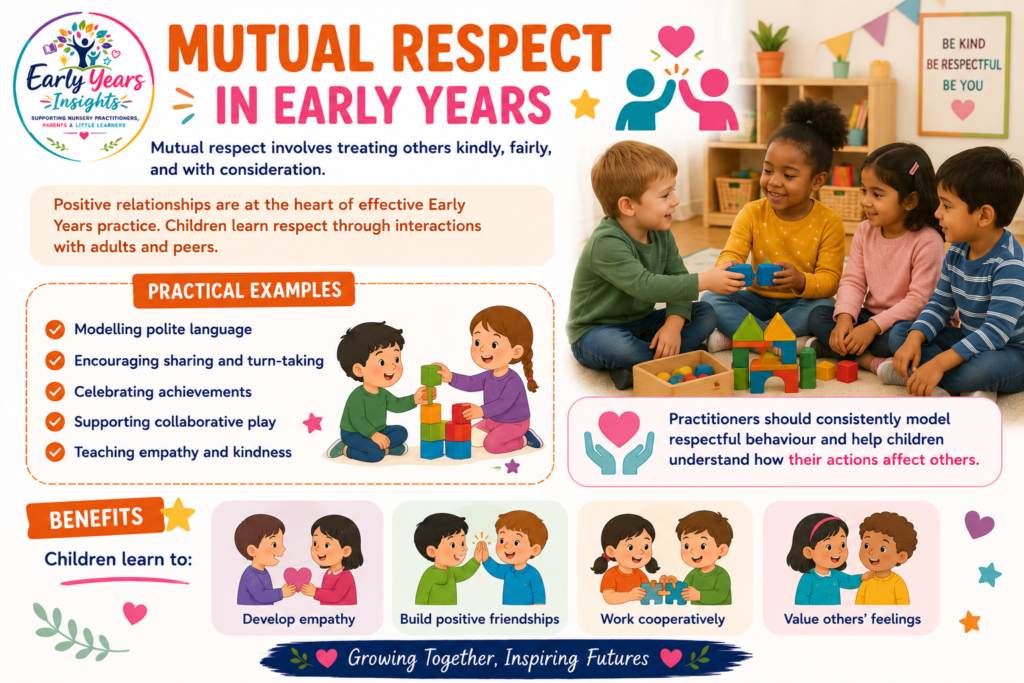
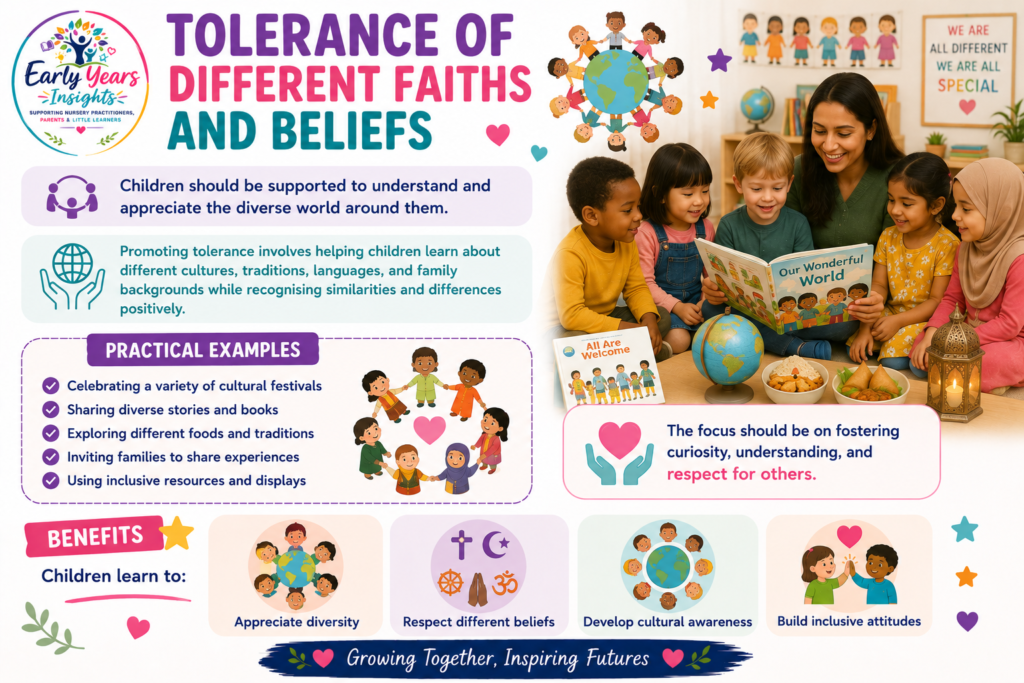
British Values in Early Years help children develop respect, confidence, inclusion, and positive relationships. Through everyday experiences, practitioners can promote democracy, rule of law, individual liberty, mutual respect, and tolerance of different faiths and beliefs within EYFS settings.
Fundamental British Values play an important role in helping children develop the skills, attitudes, and understanding needed to become confident, respectful, and active members of society. In Early Years settings, British Values are not taught as a separate subject. Instead, they are embedded naturally through everyday experiences, positive relationships, and meaningful interactions.
By promoting democracy, the rule of law, individual liberty, mutual respect, and tolerance of different faiths and beliefs, practitioners help children develop a sense of belonging, understand the importance of fairness, and learn how to value diversity.
This guide explores what British Values are, why they matter in Early Years, and practical ways practitioners can promote them within their daily practice.
What Are Fundamental British Values?
Why Are British Values Important in Early Years?
Children begin developing their understanding of relationships, fairness, and community from a very young age. Early Years practitioners play a significant role in supporting this development through everyday experiences.
Promoting British Values helps children:
- Develop confidence and self-esteem
- Learn to express their thoughts and feelings
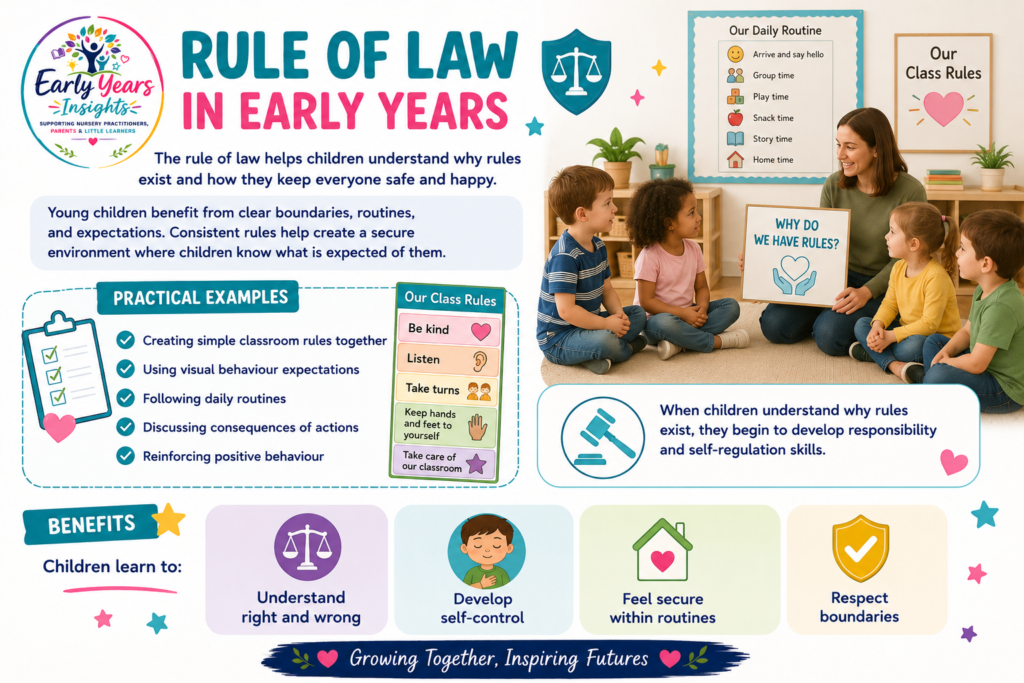
- Understand the importance of rules and boundaries
- Build positive relationships with others
- Appreciate diversity and inclusion
- Prepare for life in modern Britain
These values also support key areas of learning within the EYFS framework, particularly Personal, Social and Emotional Development (PSED), Communication and Language, and Understanding the World.
Practical Ways to Promote British Values Every Day
British Values should be embedded throughout daily practice rather than taught as isolated topics.
Daily Strategies
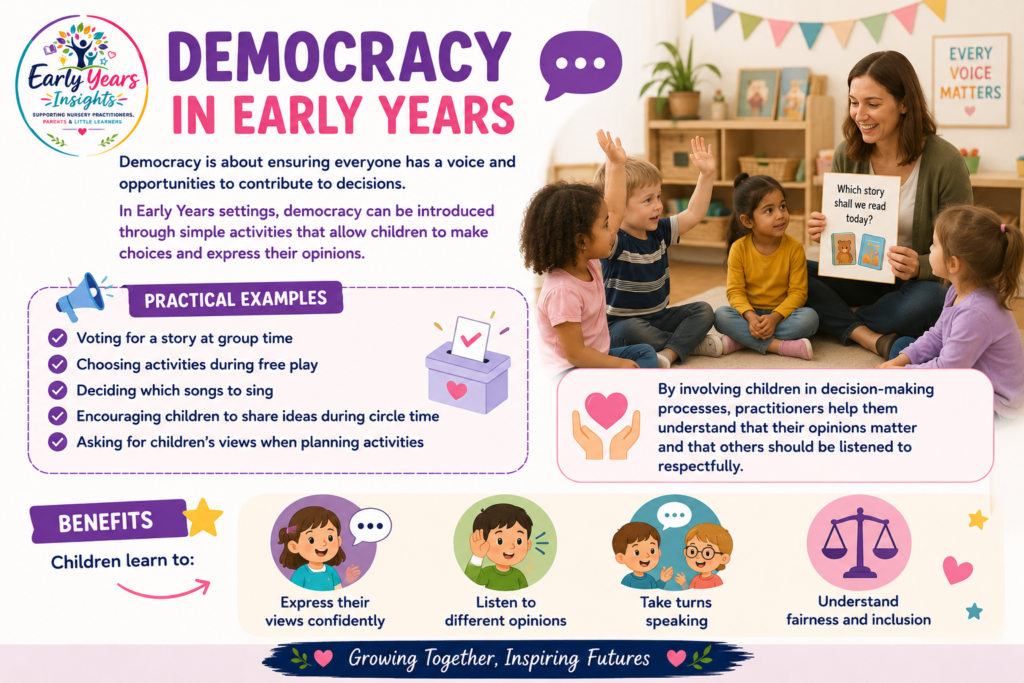
- Use circle time discussions
- Encourage turn-taking during conversations
- Create opportunities for voting
- Celebrate cultural events and festivals
- Share diverse books and learning resources
- Promote positive behaviour through role modelling
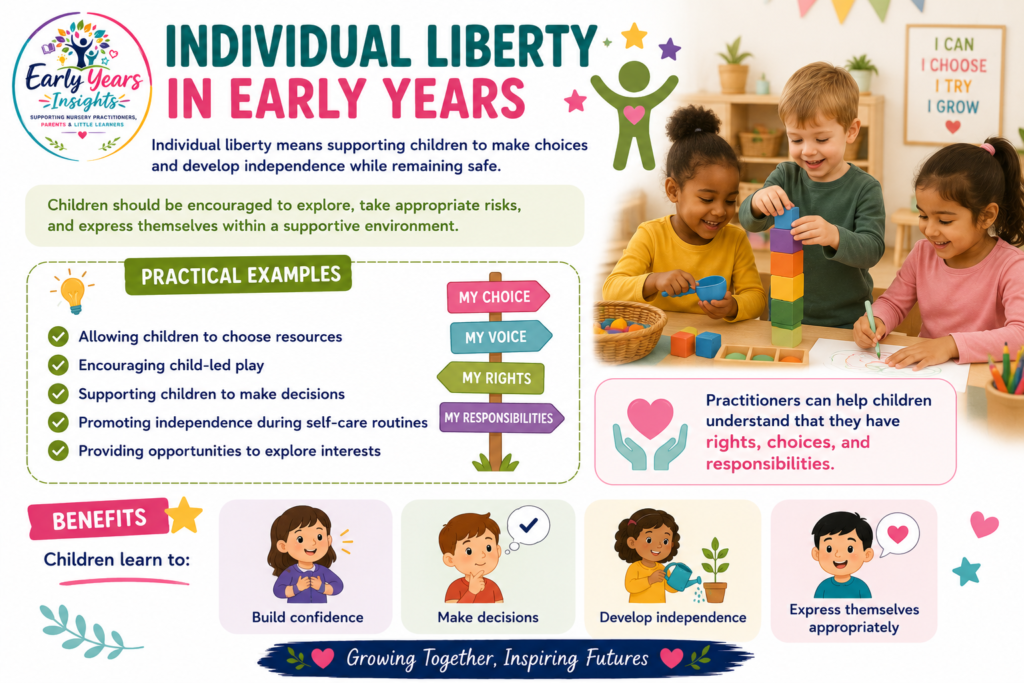
- Support children’s independence
- Encourage collaborative play
- Involve families in learning experiences
- Use restorative approaches to resolve conflicts
Small everyday interactions often have the greatest impact on children’s understanding of British Values.
British Values and the EYFS Framework
British Values naturally link with the Early Years Foundation Stage (EYFS).
Personal, Social and Emotional Development (PSED)
Children learn to:
- Build relationships
- Manage emotions
- Develop self-confidence
- Understand expectations
Communication and Language
Children learn to:
- Express opinions
- Listen to others
- Participate in discussions
Understanding the World
Children learn to:
- Explore communities
- Appreciate diversity
- Understand different cultures and traditions
Through these areas of learning, British Values become a natural part of children’s development.
Common Misconceptions About British Values
British Values Are Not About Politics
British Values are not political concepts. They focus on helping children develop respect, fairness, inclusion, and positive relationships.
British Values Are Not Separate Lessons
Practitioners do not need dedicated British Values lessons. The values should be embedded throughout everyday practice.
British Values Support Diversity
Promoting British Values includes celebrating and respecting different cultures, beliefs, and backgrounds.
Frequently Asked Questions
What are the five British Values?
The five Fundamental British Values are democracy, rule of law, individual liberty, mutual respect, and tolerance of different faiths and beliefs.
How do nurseries promote British Values?
Nurseries promote British Values through everyday experiences such as voting activities, circle time discussions, collaborative play, cultural celebrations, and positive behaviour support.
Are British Values part of the EYFS?
While British Values are not a separate area of learning, they are closely linked to the EYFS, particularly Personal, Social and Emotional Development, Communication and Language, and Understanding the World.
How does Ofsted assess British Values?
Ofsted considers how settings promote children’s understanding of respect, inclusion, diversity, and positive relationships as part of their wider curriculum and practice.
Why are British Values important for young children?
British Values help children develop social skills, confidence, empathy, respect, and an understanding of how to live positively within diverse communities.
What are the five British Values?
The five British Values are democracy, rule of law, individual liberty, mutual respect, and tolerance of different faiths and beliefs.
How are British Values promoted in EYFS?
British Values are promoted through play, discussions, routines, positive relationships, and inclusive learning experiences.
Key Takeaways
✔ British Values help children develop respect, confidence, and positive relationships.
✔ The five values are democracy, rule of law, individual liberty, mutual respect, and tolerance of different faiths and beliefs.
✔ British Values should be embedded throughout daily practice rather than taught as separate lessons.
✔ Everyday experiences such as voting, sharing, and collaborative play provide meaningful learning opportunities.
✔ Promoting British Values supports children’s development and prepares them for life in modern Britain.
Suggested External Trust Links
Link to authoritative UK sources:
- Department for Education – Promoting Fundamental British Values
https://www.gov.uk/government/publications/promoting-fundamental-british-values-through-smsc - EYFS Statutory Framework
https://www.gov.uk/government/publications/early-years-foundation-stage-framework–2 - Ofsted
https://www.gov.uk/government/organisations/ofsted
Conclusion
Fundamental British Values are an important part of high-quality Early Years practice. Through positive relationships, inclusive environments, and meaningful everyday experiences, practitioners can help children develop the skills and attitudes needed to thrive within diverse communities.
By embedding democracy, the rule of law, individual liberty, mutual respect, and tolerance into daily routines and interactions, Early Years settings create strong foundations for lifelong learning, wellbeing, and citizenship.