
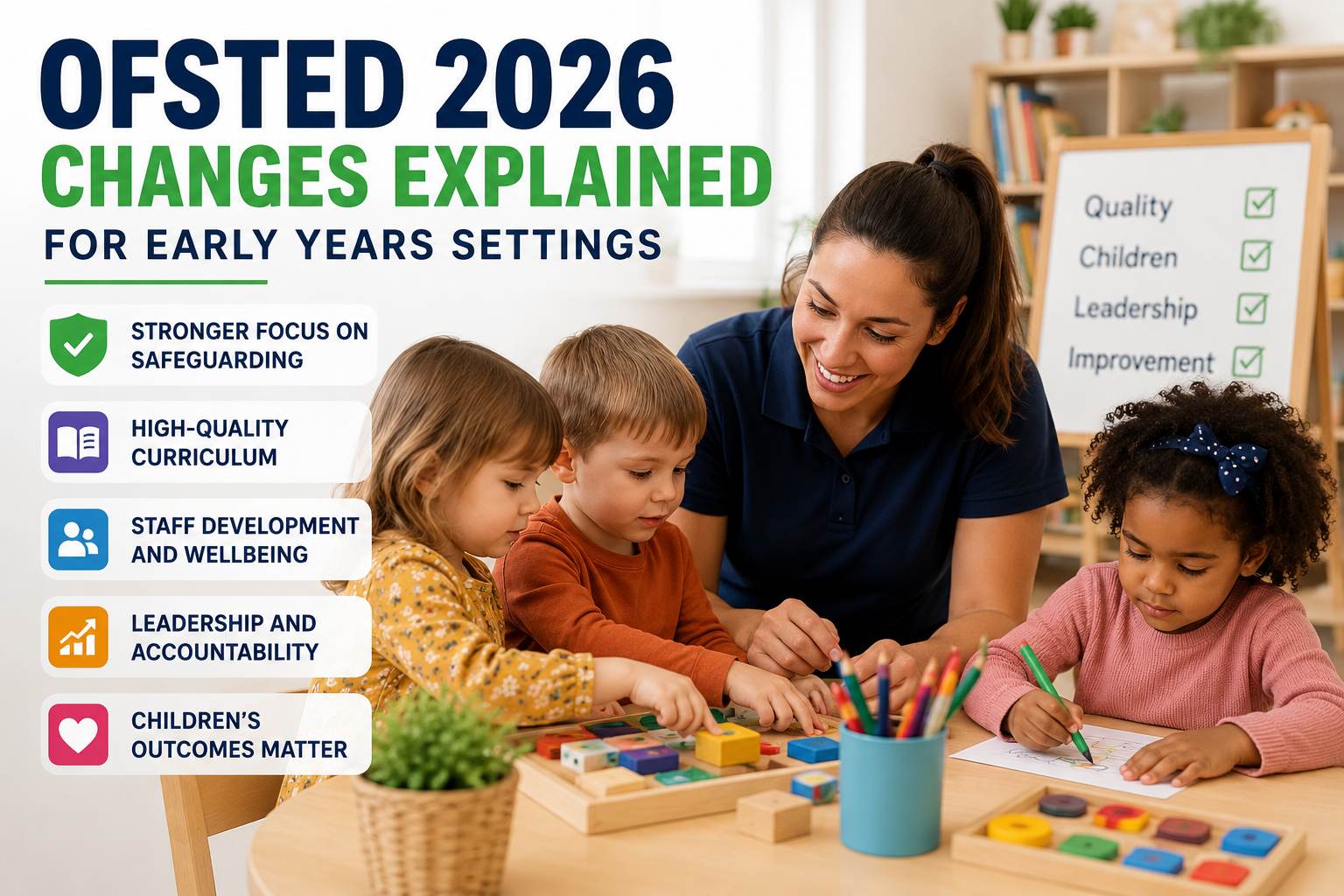
The proposed Ofsted changes for 2026 aim to provide a clearer and more balanced inspection process for early years settings. Nursery leaders, childminders and practitioners should understand how these changes may affect inspections, safeguarding responsibilities, curriculum planning, staff development and children’s outcomes.
This guide explains the key changes and what early years providers can do now to prepare confidently.
Why Is Ofsted Changing in 2026?
Key Area Ofsted Inspectors May Focus On
- Safeguarding and Child Protection
Inspectors will continue to focus on safeguarding arrangements, staff knowledge and how settings protect children.
- Curriculum and Learning
Providers should demonstrate how their curriculum supports children’s development and learning.
- Staff Training and Development
Inspectors may consider how staff receive ongoing professional development and supervision.
- Leadership and Management
Leaders should show how they monitor quality, support staff and improve outcomes for children.
- Children’s Wellbeing
A stronger focus may be placed on children’s emotional wellbeing, inclusion and personal development.
Ofsted has announced plans to improve the inspection process across education and early years settings. The aim is to provide clearer information for providers, parents and carers while reducing unnecessary pressure associated with inspections.
The proposed changes focus on giving a more balanced view of a setting’s strengths and areas for development. Rather than concentrating on a single overall judgement, inspections are expected to provide a broader picture of quality and effectiveness.
For early years providers, this means placing continued emphasis on safeguarding, leadership, curriculum quality, staff development and children’s experiences while ensuring that inspections are fair, transparent and supportive of improvement.
Key Areas Inspectors May Focus On
Early years providers should continue to ensure that the following areas are embedded in daily practice:
Safeguarding
Inspectors will expect robust safeguarding procedures, accurate records, safer recruitment practices and staff who understand their responsibilities to protect children from harm.
Quality of Education
Practitioners should be able to explain how activities support children’s learning and development. Inspectors may explore how the curriculum helps children make progress across all areas of learning.
Behaviour and Personal Development
Settings should demonstrate how they support children’s emotional wellbeing, independence, confidence and positive behaviour.
Leadership and Management
Leaders should be able to show how they support staff, monitor quality, identify areas for improvement and maintain high standards throughout the setting.
How Early Years Providers Can Prepare for Ofsted 2026
Early years providers can start preparing now by reviewing safeguarding procedures, ensuring staff training is up to date and regularly evaluating the quality of teaching and learning.
Settings should also ensure that observations, assessments and planning clearly support children’s progress and development.
Leaders should encourage reflective practice, involve staff in quality improvement and maintain strong partnerships with parents and carers.
By focusing on continuous improvement and children’s outcomes, providers can feel more confident and inspection ready.
Conclusion
The proposed Ofsted changes for 2026 aim to provide a more balanced and informative inspection process for early years settings.
Although details may continue to develop, providers who focus on safeguarding, curriculum quality, leadership and children’s wellbeing will be well placed to meet future expectations.
Staying informed and maintaining high-quality practice remains the best way to prepare for any inspection changes.