
Introduction
What is SEND in Early Years? Understanding Special Educational Needs and Disabilities (SEND) is essential for early years practitioners who support children with different learning and development needs. Every child is unique and develops at their own pace. However, from the early years some children may need additional support to help them learn, communicate, interact with others, or access the environment effectively. This is where understanding Special Educational Needs and Disabilities (SEND) becomes essential. Early years practitioners play a vital role in recognising children’s individual needs, creating inclusive environments, and working in partnership with families and professionals to ensure every child receives the support they need.
This comprehensive guide explains what SEND is, the different areas of need, early signs to look for, and practical ways to provide effective support within early years settings. As a early years practitioner identifying the child needs at right time and right way can make a significant difference to their learning, development, confidence, and overall wellbeing.
What Does SEND Mean?
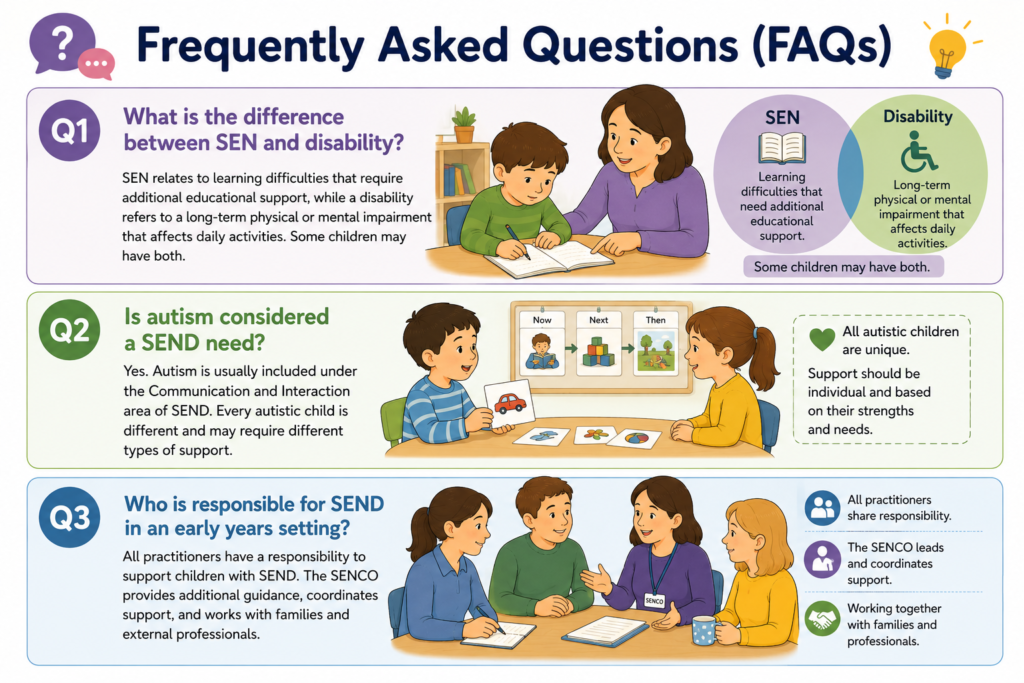
SEND stands for Special Educational Needs and Disabilities. A child has Special Educational Needs (SEN) if they have a learning difficulty or disability that requires special educational provision to help them access learning and make progress. A disability is a physical or mental impairment that has a substantial and long-term effect on a child’s ability to carry out normal day-to-day activities. Not all children with a disability have SEN, and not all children with SEN have a disability. However, some children may have both. The main aim of SEND support is to remove barriers to learning and help every child achieve their full potential.
The Four Broad Areas of SEND
According to the SEND Code of Practice, children’s needs are generally grouped into four broad areas.
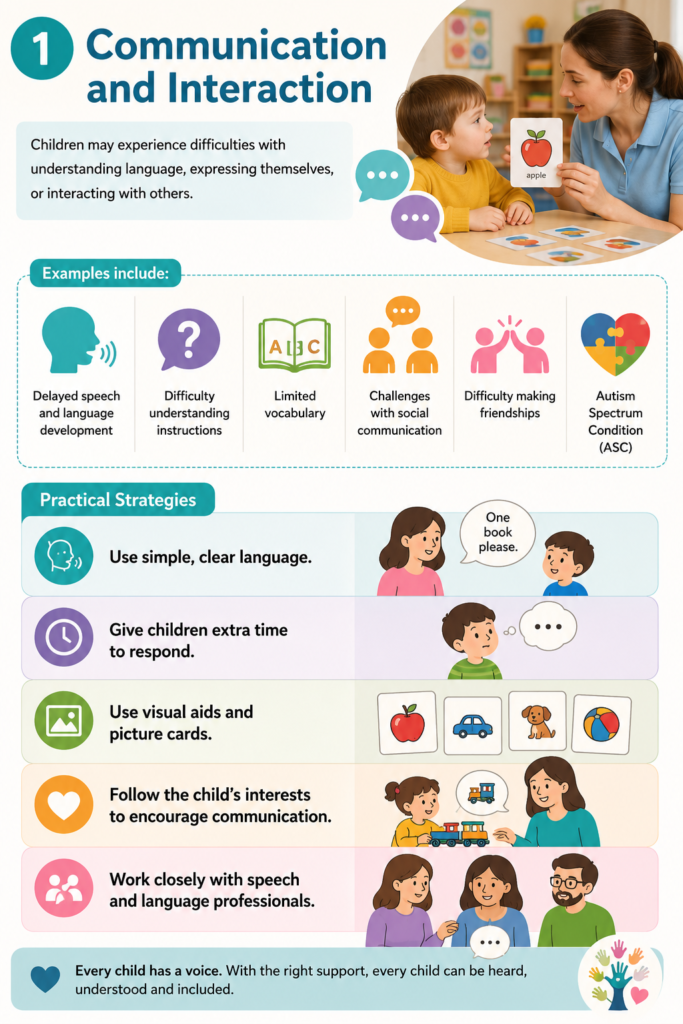
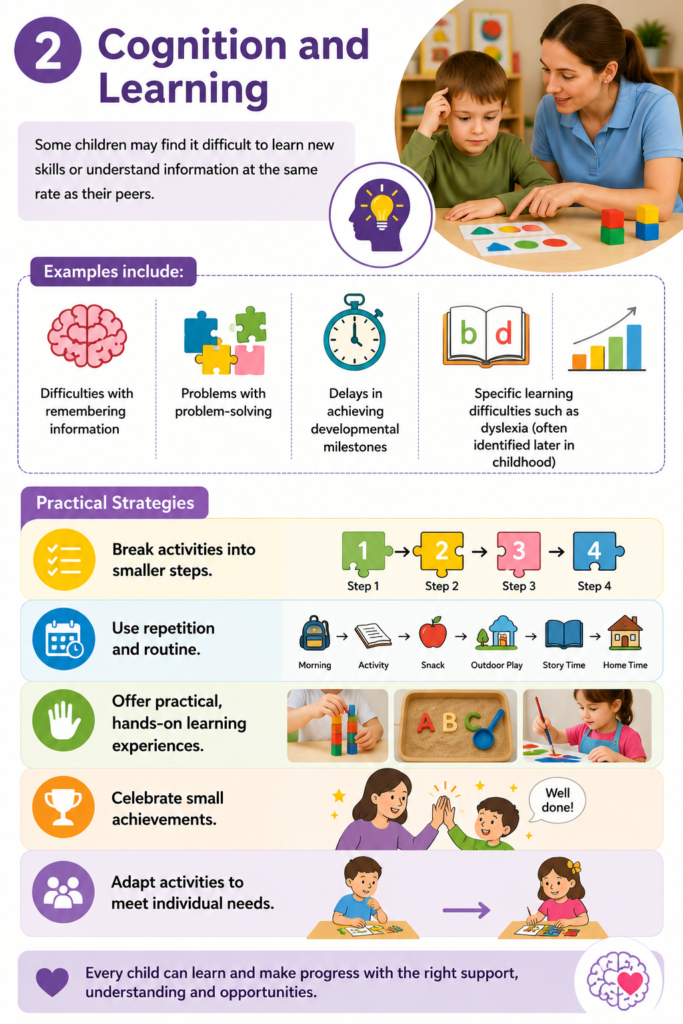
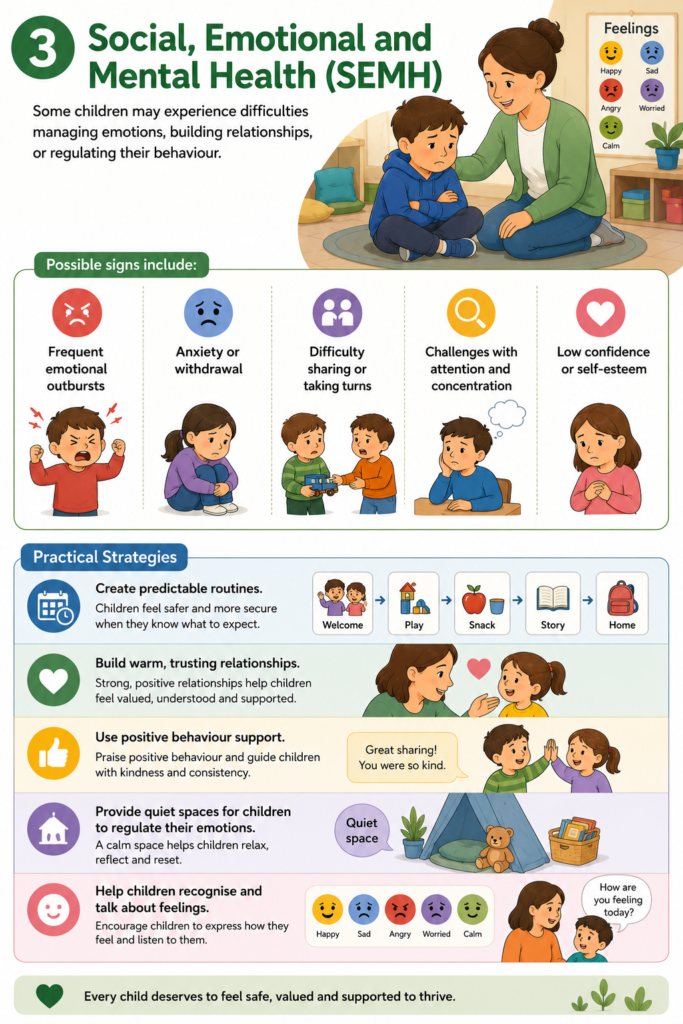
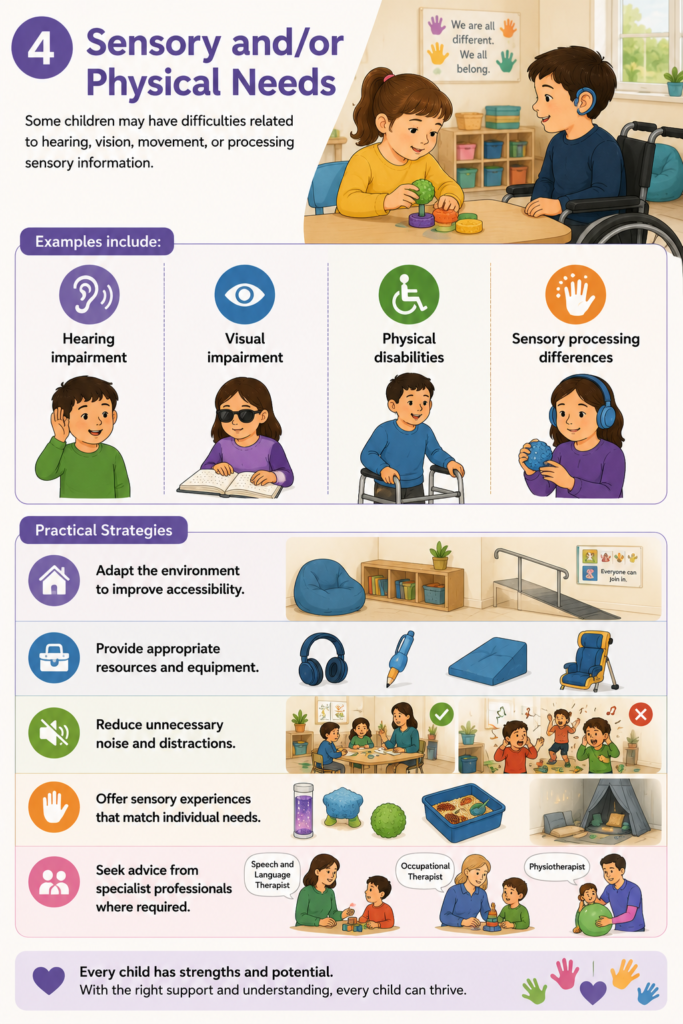
The Importance of Early Identification
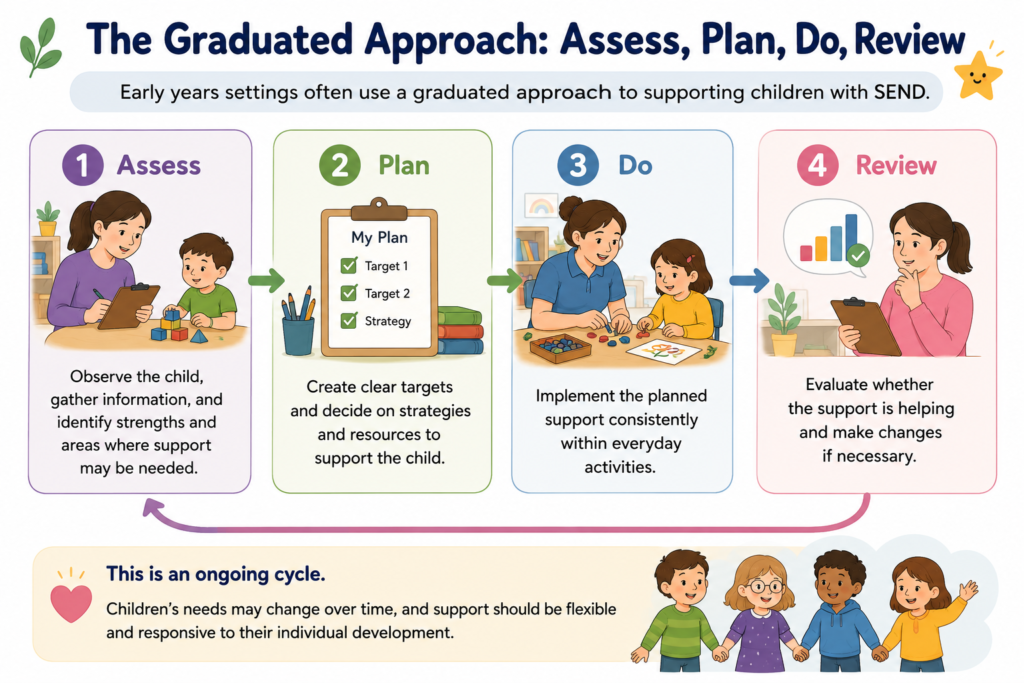
Early identification of SEND is essential because it allows children to receive support as soon as possible. Early years practitioners should regularly observe children’s play, learning, communication, and social interactions. If concerns arise, practitioners should discuss observations with parents and follow their setting’s SEND procedures.
Early support can:
- Improve children’s confidence and wellbeing
- Reduce barriers to learning
- Help children develop essential skills
- Support smoother transitions to school
The Role of the Key Person
The key person plays a significant role in identifying and supporting children with SEND.
Their responsibilities may include:
- Building strong relationships with the child and family
- Monitoring progress through observations and assessments
- Planning activities based on the child’s individual needs
- Working alongside the setting’s SENCO and other professionals
- Ensuring the child feels valued, included, and supported
Working in Partnership with Parents and Professionals
Parents know their children best and should be involved in decisions about their child’s support.
Effective partnerships involve:
Maintaining regular communication
Sharing observations and progress
Listening to parental concerns
Agreeing on next steps
Early years settings may also work with professionals such as:
Specialist SEND support teams
Speech and Language Therapists
Educational Psychologists
Health Visitors
Occupational Therapists
More SEND support resources
Parents and early years practitioners can find additional information about what is SEND in Early Years and how to support children with additional needs through trusted resources such as the NHS and UK Government guidance.
Creating an Inclusive Early Years Environment
An inclusive environment ensures every child feels safe, valued, and able to participate.
Practitioners can promote inclusion by:
- Providing resources that reflect diversity
- Adapting activities for different abilities
- Using visual timetables and routines
- Encouraging positive relationships between children
- Celebrating each child’s strengths and achievements
Additional Support Strategies for Children with SEND
Early years practitioners can use a range of strategies to support children with SEND in their daily learning and development. This may include adapting activities to meet individual needs, using visual supports, creating predictable routines, providing additional communication methods, and working closely with parents and professionals.
Every child develops at their own pace, and effective SEND support focuses on recognising strengths, removing barriers to learning, and creating an inclusive environment where all children can thrive.
Practical Strategies for Supporting SEND in Early Years
Early years practitioners can use a range of practical strategies to support children with SEND. Every child is unique and may require different approaches depending on their individual strengths and needs.
Effective strategies include using visual timetables, adapting activities, providing additional communication support, giving children extra time to respond, and creating predictable daily routines.
Positive relationships with parents, carers, and other professionals are also essential. By sharing information and working together, practitioners can provide consistent support that helps children make progress and feel included.
Regular observations and assessments help practitioners understand children’s development and identify any changes in their needs. Early support can make a significant difference to a child’s confidence, learning, and overall wellbeing.
Understanding what is SEND in Early Years helps practitioners recognise children’s individual needs and provide the right support at the right time.
By learning what is SEND in Early Years, professionals and parents can work together to create an inclusive environment where every child can thrive.
For more information about SEND support and guidance, visit the UK Government SEND Code of Practice.
Signs of SEND in Early Years
Some children may show signs that they need additional support. These signs may include difficulties with communication, social interaction, understanding instructions, managing emotions, physical development, or learning new skills.
It is important to remember that every child develops at their own pace. Practitioners should observe carefully, discuss concerns with families, and follow their setting’s SEND procedures when additional support may be required.
Conclusion
Understanding what SEND in early years means is essential for creating inclusive environments where every child has the opportunity to learn and succeed. Early identification, effective support strategies, and strong partnerships with families and professionals can help children overcome barriers to learning and reach their full potential.
Very good explanation it’s helpful for myself because I am working in early years setting thank you for sharing great information
Thank you, Mohana, for your kind feedback. We’re delighted to hear that you found the information helpful in your early years practice. We will continue to share practical EYFS guidance, resources, and professional insights to support practitioners like you.
Kind regards,
Early Years Insight Team