
Introduction
The Toxic Trio Explained is a safeguarding concept describing the combination of domestic abuse, parental mental health difficulties, and substance misuse. Understanding these factors helps early years practitioners recognise risks and support children’s safety and wellbeing.
Safeguarding children requires practitioners to look beyond visible signs of harm and consider the wider circumstances affecting a child’s life. Some children may experience multiple challenges within their family environment that can increase the risk of harm and negatively affect their health, safety, and development.
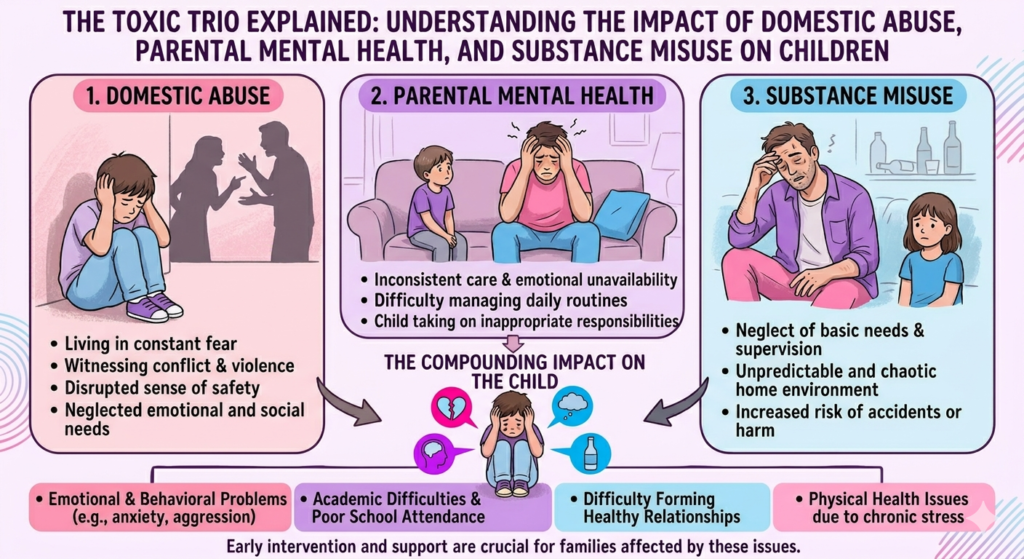
One important safeguarding concept that early years practitioners should understand is the Toxic Trio. The Toxic Trio refers to the combination of:
- Domestic abuse
- Parental mental health difficulties
- Parental substance misuse
When these three factors occur together, the risks to children can significantly increase. However, it is important to remember that the presence of one or more factors does not automatically mean a child is being harmed. Practitioners must use professional curiosity, consider the whole family situation, and follow safeguarding procedures when concerns arise.
At Early Years Insights, we support early years professionals with practical safeguarding knowledge to help recognise risks, respond appropriately, and create safe environments where every child can thrive.
The Toxic Trio Explained helps early years practitioners understand how domestic abuse, parental mental health difficulties, and substance misuse can combine to increase risks for children.
What Is the Toxic Trio?
The term Toxic Trio describes a combination of three complex family difficulties that are often found in serious safeguarding cases involving children:
- Domestic abuse between adults in the household
- Parental mental health difficulties that affect a parent’s ability to safely meet a child’s needs
- Alcohol or drug misuse by a parent or carer
Each issue can impact a child individually, but when these difficulties occur together, they may create an environment where a child experiences neglect, emotional harm, inconsistent care, or exposure to frightening situations.
Early years practitioners should not make assumptions or judge families. Instead, they should observe changes in a child’s behaviour, appearance, emotional wellbeing, and development while maintaining a supportive and non-judgemental approach.
1. Domestic Abuse and Its Impact on Children
What Is Domestic Abuse?
Domestic abuse is a pattern of controlling, coercive, threatening, violent, or abusive behaviour between people who are personally connected. Children can be affected not only by experiencing abuse directly but also by seeing, hearing, or living with the effects of domestic abuse.
How Domestic Abuse May Affect Children
Children exposed to domestic abuse may:
- Become anxious, fearful, or withdrawn
- Display aggressive or challenging behaviour
- Have difficulties forming secure attachments
- Experience sleep problems or nightmares
- Show delays in speech, language, or emotional development
- Recreate frightening experiences during play
- Become overly protective of a parent or sibling
Early Years Practice Scenario
A previously confident four-year-old begins arriving at nursery tired and quiet. During role-play, the child repeatedly makes dolls argue and says, “They are shouting again.” The practitioner records these observations, listens without asking leading questions, and reports concerns to the Designated Safeguarding Lead (DSL).
2. Parental Mental Health Difficulties
Understanding Parental Mental Health
Many parents experience mental health difficulties and continue to provide safe, loving care for their children. However, when a parent’s mental health significantly affects their ability to respond to their child’s physical or emotional needs, there may be safeguarding concerns.
Mental health difficulties may include:
- Severe depression
- Anxiety disorders
- Psychosis
- Trauma-related difficulties
- Other conditions that affect daily functioning
Possible Impact on Children
A child may:
- Experience inconsistent routines and boundaries
- Miss appointments or educational opportunities
- Take on caring responsibilities beyond their age
- Show emotional distress or anxiety
- Have unmet physical or emotional needs
Early Years Practice Scenario
A practitioner notices a child frequently arriving late, appearing tired, and expressing worries about looking after a parent at home. The practitioner records the concerns and shares them with the DSL to consider what support may be needed for the child and family.
3. Parental Substance Misuse
What Is Substance Misuse?
Substance misuse refers to the harmful use of alcohol, illegal drugs, or the inappropriate use of prescribed medication that negatively affects a person’s ability to manage daily life and responsibilities.
When a parent or carer struggles with substance misuse, it may affect their ability to provide consistent, safe, and appropriate care for their child.
Possible Impact on Children
Children may experience:
- Poor supervision or unsafe environments
- Inconsistent routines
- Lack of food, cleanliness, or medical care
- Emotional insecurity
- Exposure to risky adults or dangerous situations
- Increased anxiety and stress
Early Years Practice Scenario
A child regularly arrives at nursery without lunch, appears unwashed, and becomes anxious when discussing who will collect them at the end of the day. Practitioners recognise the pattern of concerns, keep accurate records, and discuss the situation with the DSL.
Why the Combination of the Toxic Trio Increases Risk
The presence of domestic abuse, mental health difficulties, and substance misuse can create a complex environment where children may be exposed to multiple forms of harm.
For example:
- Domestic abuse may cause fear and emotional trauma.
- Mental health difficulties may affect a parent’s ability to maintain consistent routines.
- Substance misuse may increase unpredictability or reduce a parent’s capacity to supervise a child safely.
Together, these factors may increase the likelihood of:
- Neglect
- Emotional abuse
- Physical harm
- Developmental delays
- Poor emotional wellbeing
- Difficulties with learning and relationships
Recognising Possible Signs of the Toxic Trio
Early years practitioners may notice:
Behavioural Signs
- Sudden changes in behaviour
- Withdrawal or excessive clinginess
- Aggressive behaviour
- Difficulty regulating emotions
- Anxiety or fearfulness
Physical Signs
- Poor hygiene
- Inappropriate clothing for the weather
- Frequent tiredness
- Hunger
- Missed medical needs
Developmental Signs
- Delays in speech and language
- Difficulties with social skills
- Poor concentration
- Regression in previously achieved skills
The Importance of Professional Curiosity
Professional curiosity means looking beyond the immediate situation and considering whether there may be underlying factors affecting a child’s wellbeing.
For example, a child arriving late on one occasion may not be concerning. However, repeated lateness combined with tiredness, poor hygiene, and changes in behaviour may indicate that further support or safeguarding action is needed.
Practitioners should:
- Observe patterns over time
- Record facts accurately
- Avoid making assumptions
- Share concerns with the Designated Safeguarding Lead (DSL)
- Work with other professionals where appropriate
A Whole-Family Safeguarding Scenario
A nursery practitioner notices that a child has become increasingly withdrawn and often arrives hungry and tired. The child mentions that there is “a lot of shouting at home.” The parent frequently appears overwhelmed and has spoken about struggling with their mental health. Staff are also aware of concerns regarding alcohol misuse within the household.
While none of these factors alone confirms abuse, together they represent possible indicators of the Toxic Trio. The practitioner records the concerns, informs the DSL, and follows the setting’s safeguarding procedures to ensure the child receives appropriate support.
How Should Early Years Practitioners Respond?
If a practitioner has concerns related to the Toxic Trio, they should:
- Stay focused on the child’s needs
- Listen carefully and take concerns seriously
- Record observations factually
- Use the child’s own words when making records
- Avoid investigating or asking leading questions
- Report concerns to the DSL immediately
- Follow the setting’s safeguarding and local authority procedures
Remember: It is not the practitioner’s role to prove that a child is experiencing harm. Their responsibility is to recognise concerns, record them, and report them appropriately.
Working in Partnership with Families
Safeguarding should be approached with sensitivity and respect. Many families experiencing challenges benefit greatly from early help and support.
Practitioners should:
- Build positive relationships with parents and carers
- Offer support without judgement
- Maintain confidentiality
- Work alongside other professionals when appropriate
- Always prioritise the child’s safety and wellbeing
Key Takeaways
✔ The Toxic Trio refers to domestic abuse, parental mental health difficulties, and substance misuse.
✔ The combination of these factors can increase risks to children.
✔ Not all families experiencing these challenges place children at risk, but practitioners should remain professionally curious.
✔ Changes in a child’s behaviour, development, appearance, or emotional wellbeing should be considered carefully.
✔ Accurate recording and timely reporting are essential parts of safeguarding practice.
Frequently Asked Questions (FAQs)
What is the Toxic Trio in safeguarding?
The Toxic Trio refers to domestic abuse, parental mental health difficulties, and substance misuse.
How can early years practitioners respond to The Toxic Trio Explained?
Early years practitioners responding to The Toxic Trio Explained should observe concerns carefully, record facts accurately, and follow their setting’s safeguarding policy.
Why is the Toxic Trio important in early years?
Early years practitioners are often the first to notice changes in a child’s behaviour, emotional wellbeing, and development.
Does the presence of the Toxic Trio always mean a child is being abused?
No. Many families experiencing one or more of these difficulties can provide safe and loving care. However, the combination of these factors can increase vulnerability and requires practitioners to remain aware of possible risks.
What should I do if I suspect a child is affected by the Toxic Trio?
Record your concerns factually and report them to your Designated Safeguarding Lead (DSL) following your setting’s safeguarding policy.
Why is professional curiosity important?
Professional curiosity helps practitioners look beyond individual incidents and identify patterns that may indicate a child or family needs additional support.
Recognising The Toxic Trio Explained in Everyday Practice
Early years practitioners should understand that The Toxic Trio Explained is not about judging families but recognising when a combination of domestic abuse, parental mental health difficulties, and substance misuse may increase risks to children.
Further Safeguarding Resources
1. GOV.UK – Working Together to Safeguard Children (Statutory Guidance)
This guidance explains how organisations and professionals should work together to protect children and promote their welfare.
Working Together to Safeguard Children – GOV.UK
2. NSPCC – Domestic Abuse and Its Impact on Children
Provides information about how domestic abuse affects children and the support available.
NSPCC Domestic Abuse and Children
3. NSPCC – Parental Mental Health and Child Wellbeing
Explains how parental mental health can affect children and why early support is important.
NSPCC Parental Mental Health and Child Wellbeing
4. GOV.UK – Drug Misuse and Dependence: UK Guidelines
Provides information about substance misuse, support, and professional understanding.
Drug Misuse and Dependence: UK Guidelines – GOV.UK
Why Understanding The Toxic Trio Explained Matters
Understanding The Toxic Trio Explained enables practitioners to identify patterns of concern, maintain professional curiosity, and follow effective safeguarding procedures.
Final Thoughts
Understanding The Toxic Trio Explained in Everyday Safeguarding
The Toxic Trio Explained highlights how domestic abuse, parental mental health difficulties, and substance misuse may combine to affect a child’s safety and wellbeing. Early years practitioners should use professional curiosity, observe patterns of concern, and follow safeguarding procedures.
Why The Toxic Trio Explained Matters in Early Years
Understanding The Toxic Trio Explained helps practitioners recognise possible risk factors, provide appropriate support, and ensure children receive help at the earliest opportunity.
Understanding the Toxic Trio is an essential part of effective safeguarding practice. Early years professionals are often in a unique position to notice small changes that may indicate a child or family needs support.
At Early Years Insights, we believe that informed, confident practitioners play a vital role in protecting children. Through professional curiosity, accurate record-keeping, and timely safeguarding action, practitioners can help ensure that every child has the opportunity to feel safe, valued, and supported.