
Table of Contents
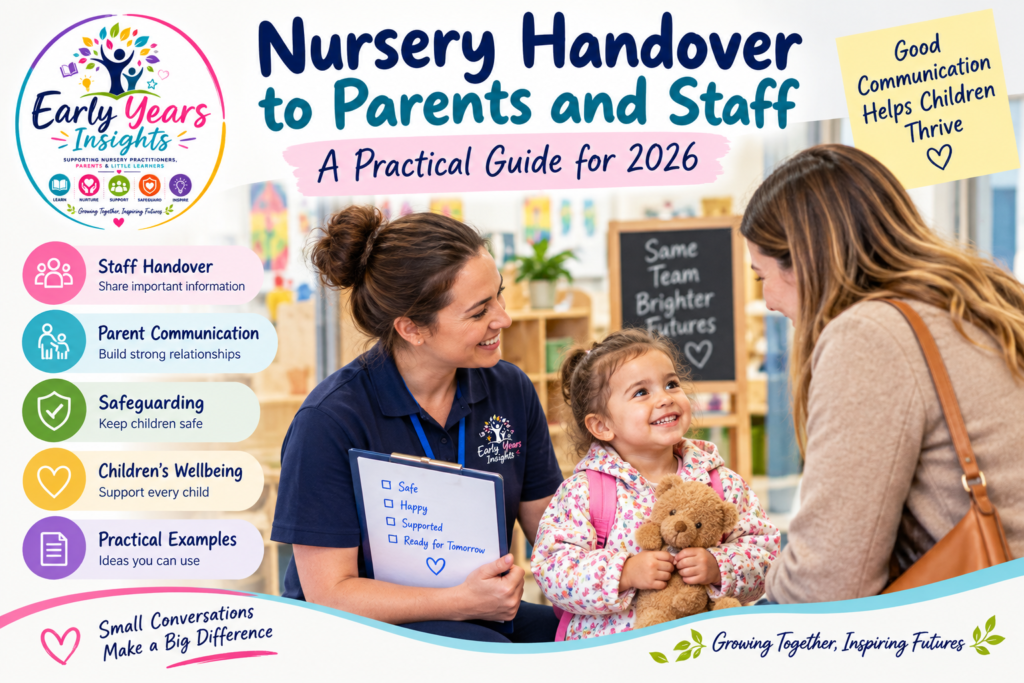
Handover is something that happens every day in nursery.
A practitioner may hand information to another member of staff at the start or end of a shift. At the end of the day, a parent or carer may ask how their child has been. Sometimes the conversation is very simple. Other times, there may be important information that needs to be shared.
Good handover is not about giving parents a long report every day. It is about making sure important reaches the right person.
This is especially important when the information is about a child’s safety, health, wellbeing or safeguarding.
From 1 September 2026, the updated EYFS frame works are in force in England. The changes include strengthened safeguarding and welfare requirements, including clearer requirements around safer sleep and other areas of children’s welfare. Ofsted is also using its updated early years inspection toolkit from 1 September 2026.
There is not a new 2026 rule saying that every nursery must use a particular handover form or following one specific handover method. However, it is a good time for settings to look at their current practice and make sure important information is being shared clearly.
What is a nursery handover?
A handover is when information about a child is passed from one person to another.
This can happen in different ways.
For example:
- One practitioner hands information to another practitioner.
- A Key person speaks a parent at collection time.
- Information is passed between rooms
- A practitioner tells the manage about a concern.
- A parent gives important information to a member of staff.
- Information is shared when a child moves from one room to another.
The way a nursery manages handover maybe different depending on the size of the setting and the age of the children.
The important thing is that staff know information need to be shared and who needs to receive it.
Why is good handover important?
Young children cannot always explain what has happened during their day.
A toddler may fall in the garden but only tell an adult that knee hurts. Another child may be unusually quiet because they are tired or upset.
Parents may also tell a practitioner something important in the morning that another practitioner needs to know later.
For example, a parent might say:
“She didn’t sleep very well last night, so she may be tired today”
That small piece of information can help practitioners understand why the child may need more rest or support during the day.
Good communication helps staff provide consistent care.
It also helps parents feel that staff know their child and understand what is happening during the day.
Staff-to-staff handover
Staff handover is important when responsibility for children is passed from one practitioner to another.
It does not need to be a long meeting.
A short and clear conversation can be enough when the information is straightforward.
For example:
“Leo has had a good morning . He ate most of his lunch and is now sleeping”
But if something important has happened, more information may be needed
For example:
“Leo fell while playing outside this morning. We checked him and followed our accident procedure. He has settled and is now playing normally. The accident record has been completed.”
The second example gives the next practitioner much more useful information.
What information might need to be included?
Every child is different, so there is no single list that will apply to every handover.
However, staff may need to pass on information about:
- Accidents or injuries
- Medication
- Allergies
- Food and dietary requirements
- Sleep
- Toileting
- Changes in behaviour
- A child’s emotional wellbeing
- Safeguarding concerns
- Information received from parents
- Additional support a child may need
- Anything unusual that happened during the day
The information should be relevant and appropriate.
There is no need to give a long list of ordinary details if there is nothing important to report.
Example: accident handover
Imagine that a child called Aisha falls while running in the garden.
The practitioner checks her and follows the nursery’s normal accident procedure. Aisha has small mark on her knee and settles after a few minites.
When another practitioner takes over, the handover could be:
“Aisha fell in the garden this morning and bumped her knee. She was checked and settled quickly afterwards. The accident has been recorded.”
This much more useful than:
“Aisha had little fall.”
The second sentence does not tell the next practitioner enough.
If the nursery’s procedure requires information to recorded or passed to parents, staff should follow that procedure.
Example: change in bahaviour
Sometimes there may not be an accident or obvious physical concern.
A change in behaviour can also be worth sharing.
For example:
“Maya has been quieter then usual today. She wanted to stay close to an adult and did not join the group activity this morning”
This does not mean that staff should make assumptions about why Maya is behaving differently.
It simply gives the next practitioner something useful to be aware of.
The practitioner can continue to observe Maya and provide the support she needs.
Example: information from parents
Parents often give useful information at drop-off.
For example:
“He was awake several times during the night”
Or:
“She has not eaten much breakfast this morning”
This information can help practitioners understand the child’s needs during the day.
If the information is important for the child’s care or safety, it should be passed to the appropriate staff member rather than relying on one person to remember it.
Handover about medication and allergies
Medication and allergy information needs particular care.
If a child has medication that needs to be given during the nursery day, staff should follow the setting’s medication procedure and make sure the relevant information is available to the staff who need it.
The same applies to allergies and dietary requirements.
For example, if a child has a known food allergy, the staff preparing or supervising food need to have the correct information.
A verbal message alone should not replace the nursery’s required record and procedures.
Handover about sleep
Sleep is particularly important for babies and young children.
A parent may tell that their child hand a poor night’s sleep. During the day, staff may also need to record or communicate information about a child’s sleep.
For babies, staff must follow the setting’s safe sleep arrangement.
The September 2026 EYFS changes bring clearer safer-sleep requirements into the statutory framework, and Ofsted’s updated inspection toolkit include safer sleeping within its consideration of children’s welfare and wellbeing.
You can also read our Safe Sleep and Rest Time Guidance for Early Years Settings for practical information about sleep and rest.
Handover to parents at collection time
The end of the day can be very busy
Several parents may arrive at the same time. Children may be getting ready to leave, and practitioners still need to supervise the children who remain in the setting.
Even when it is busy, important information should not be misseed.
A normal parent handover might include:
- Something the child enjoyed
- Food and drink
- Sleep, where relevant
- Toileting, where relevant
- An accident or injury
- A change in behaviour
- Something the parent needs to know
- Any follow-up needed
It does not mean that every parent needs a long conversation.
For example:
“Rebeca really enjoyed painting today. She ate most of her lunch and had a good sleep. She was very happy when she woke up and joined the music activity.”
This is a simple handover, but it gives the parent a useful picture of their child’s day.
When a parent needs more information
Sometimes a practitioner may need to have a more private conversation with a parent.
For example, if there has been an accident or a concern about a child’s wellbeing, it may not be appropriate to discuss everything in front of other parents.
A busy entrance area is not always the best place for a private conversation.
If necessary, the practitioner can ask the parent to speak somewhere more private or arrange another suitable time to discuss the matter.
Protecting children’s privacy
Nurseries care for information about many children and families.
Staff should be carful about discussing one child’s personal information where another parent or visitor can hear.
For example, a parent might ask:
“Why was that child upset today?
The practitioner should not discuss another child’s personal information.
A simple response could be:
“I’m sorry, but I can’t discuss another child’s information.”
The parent can then be given information about their own child where appropriate.
What if there is a safeguarding concern?
Safeguarding information needs to be dealt with carefully.
If a practitioner notices something that causes concern about a child’s safety or welfare, they should follow the nursery’s safeguarding procedure and report the concern to the appropriate person.
It should not simply be treated as an ordinary end-of-day conversation.
For example, if a child make a concerning disclosure, the practitioner should follow the setting’s safeguarding procedure rather than deciding to wait until collection time to tell the parent.
The Designated Safeguarding Lead (DSL) and the setting’s safeguarding procedures should guide what happens next.
The updated Ofsted inspection toolkit includes additional information about practitioners’ responsibilities to protect children form harm.
For more information, see our Safeguarding resources.
What should practitioners avoid during handover?
There are some simple mistakes that can make handover less useful.
Avoid saying too little
Saying:
“He was fine.”
does not always give parents useful information.
Instead, try to give one or two meaningful details.
For example:
“He enjoyed the construction area today and played with two friends. He ate most of his lunch.”
Avoid labels
Instead of:
“She was naughty today.”
describe what actually happened.
For example:
“She found it difficult to join the group activity today and needed extra support from an adult.”
This gives a much clearer picture.
Avoid making assumptions
Staff should describe what they have observed rather than guessing why a child behaved in a particular way.
For example:
“He cried when his parent left and needed some extra reassurance.”
is better than :
“He was upset because his parents argued.”
unless there is reliable information supporting that sattement.
Avoid discussing private information in public
If a conversation is sensitive, fine a suitable private place.
Avoid relying only on memory
Important information should be recorded using the nursery’s normal systems when required.
A verbal handover can be useful, but it should not replace required records.
A practical staff handover exmple
Imagine that you are working in the toddler room.
At 9:30am, a parent tells you:
“Amelia didn’t eat breakfast this morning.”
At 11am, Amelia eats some fruit but does not want her lunch.
At 1pm, another practitioner takes over.
A useful handover could be:
“Amelia eat breakfast at home. She had some fruit here but didn’t what much lunch. She is otherwise settled and has been enjoying outdoor play.”
This gives the next practitioner information that may be useful when monitoring Amelia during the afternoon.
A practical parent handover example
At collection time, a parent asks:
“How was he today?”
Instead of simply saying:
“Good.”
The practitiner could say:
“He had a lovely morning. He enjoyed the garden and spent some time building with blocks. He ate well at lunch and had a short sleep after lunch.”
Handover when a child moves between rooms
Handover is also important when a child moves from one room to another.
For example, a toddler may from the baby room into the toddler room.
The new staff should have the information they need to understand the child.
This may include:
- The child’s interests
- Communication needs
- Allergies
- Dietary information
- Sleep arrangements
- Toileting
- Comforting stretegies
- Additional needs
- Important information from parents
- Any current concerns
A child should not have to start again from the beginning simply because they have moved rooms.
Good communication between practitioners helps provide continuity.
A simple 2026 nursery handover checklist
Nurseries can use the following questions to review their current practice.
What does this mean for Ofsted in 2026?
The updated Ofsted early years inspection toolkit is used for inspections from 1 September 2026.
The updated materials include additional information about practitioners’ responsibilities to protect children from harm. They also include more details around safer sleep, weaning and eating arrangements.
However, it is important not to turn this into a checklist of thing that Ofsted supposedly requires when there is no specific requirement.
There is no new 2026 rule saying every nursery must use a particular handover form.
Instead, settings should look at their own procedures and make sure they meet the current EYFS requirements. and support children’s safety and wellbeing.
The current EYFS statutory framework for group and school-based providers applies from 1 September 2026 and sets the standards providers must meet for children’s learning, developments and care.
How can a nursery improve its handover?
You do not necessarily need to introduce a complicated new system.
Start with few simple questions:
Do staff know what information is important?
Does important information reach the right person?
Are parents given useful information about their child?
Are sensitve conversations kept private?
Are safeguarding concerns dealt with through the correct procedure?
Are important records completed?
If the answer to these quetions is yes, your existing system may already be working well.
Final thoughts
Handover is a small part of the nursery day, but it can make a big difference.
A good handover helps practitioners understand what a child needs, helps parents know how their child’s day been and supports continuity of care.
It does not need to be complicated.
Sometimes one clear sentence is enough.
Sometimes an important concern needs to be recorded and passed to the right person.
The main thing is that important information should not be missed.
The September 2026 EYFS changes and updated Ofsted inspection materials place a strong focus on safeguarding, children’s welfare and wellbeing. For nursery teams, this is a useful opportunity to look at everyday communication and make sure their handover arrangements support safe and consistents care.
Useful official guidance
For the most up-to-date information, practitioners should always check the current official guidance: