
By Early Years Insight | Supporting Nursery Practitioners with Practical Guidance, Resources, and Professional Development
Table of Contents
Introduction
EYFS 2026 and Ofsted expectations are important areas for early years practitioners who want to provide high-quality education, support children’s development, and prepare confidently for inspections. The Early Years Foundation Stage (EYFS) provides the foundation for children’s learning, development, and care from birth to five years old in England. High-quality early years education plays an essential role in helping children become confident, capable, and ready for their next stage of learning.
As we move through 2026, early years practitioners must continue to reflect on their practice, strengthen their knowledge, and understand what is expected during Ofsted inspections. The focus remains on providing a rich curriculum, building strong relationships, supporting every child’s individual needs, maintaining effective safeguarding, and creating environments where children can thrive.
Whether you are a nursery practitioner, childminder, room leader, SENCO, deputy manager, or nursery manager, this complete guide from Early Years Insight will help you understand EYFS expectations, improve everyday practice, and prepare confidently for Ofsted.
Understanding the EYFS Framework
The EYFS framework sets the standards for learning, development, and care for children from birth to five years old.
Its main purpose is to ensure that every child:
- Learns and develops through positive experiences.
- Remains safe and healthy.
- Receives support according to their individual needs.
- Builds confidence, resilience, and independence.
- Develops the skills required for future learning.
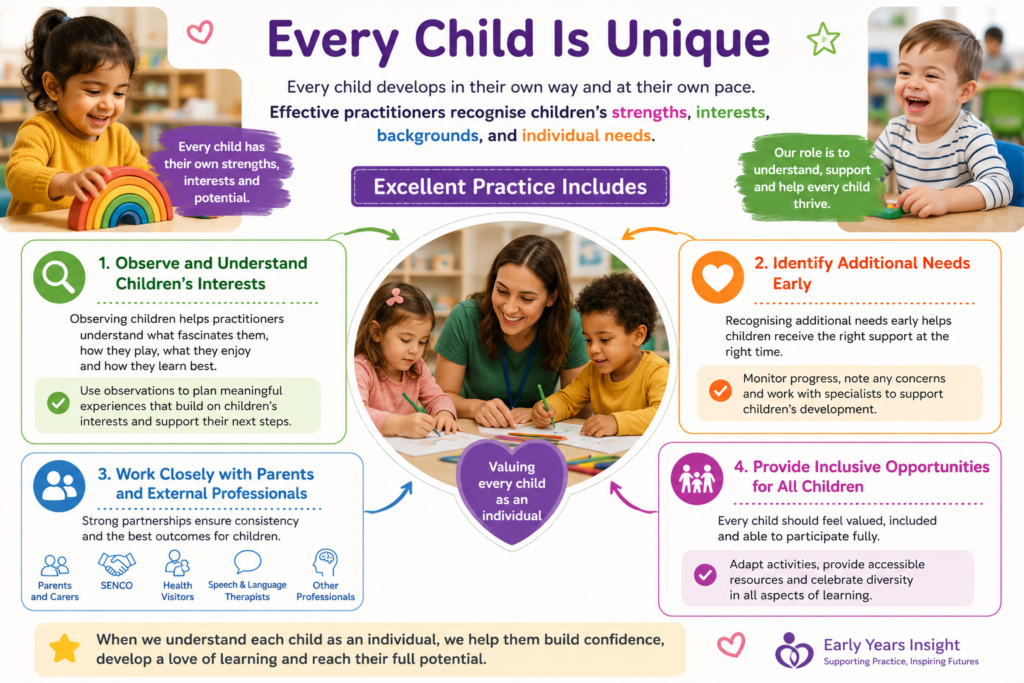
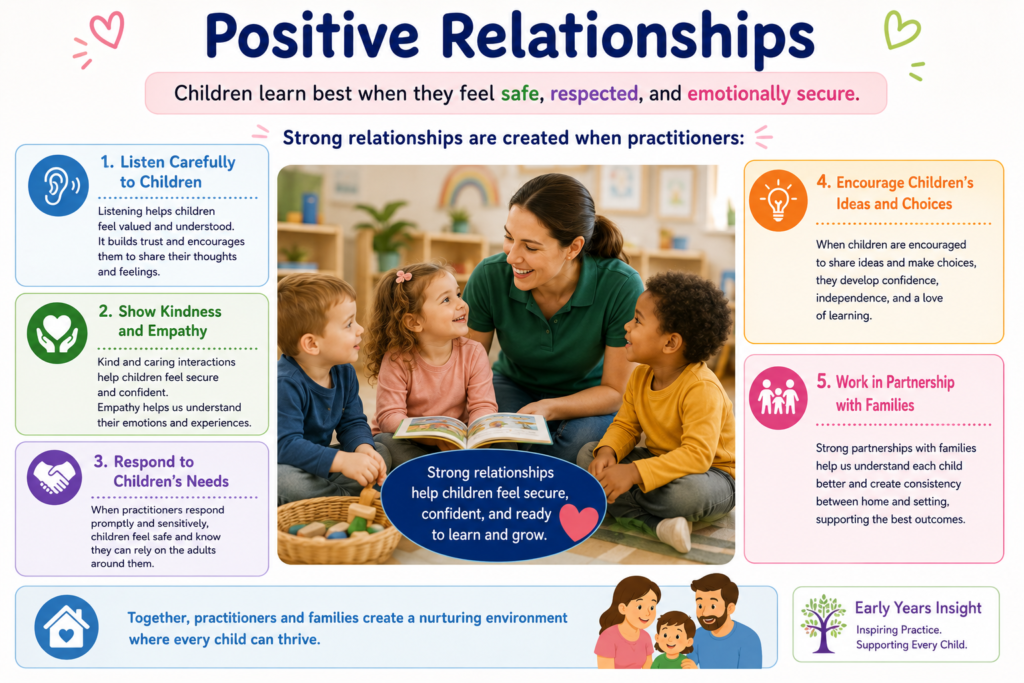
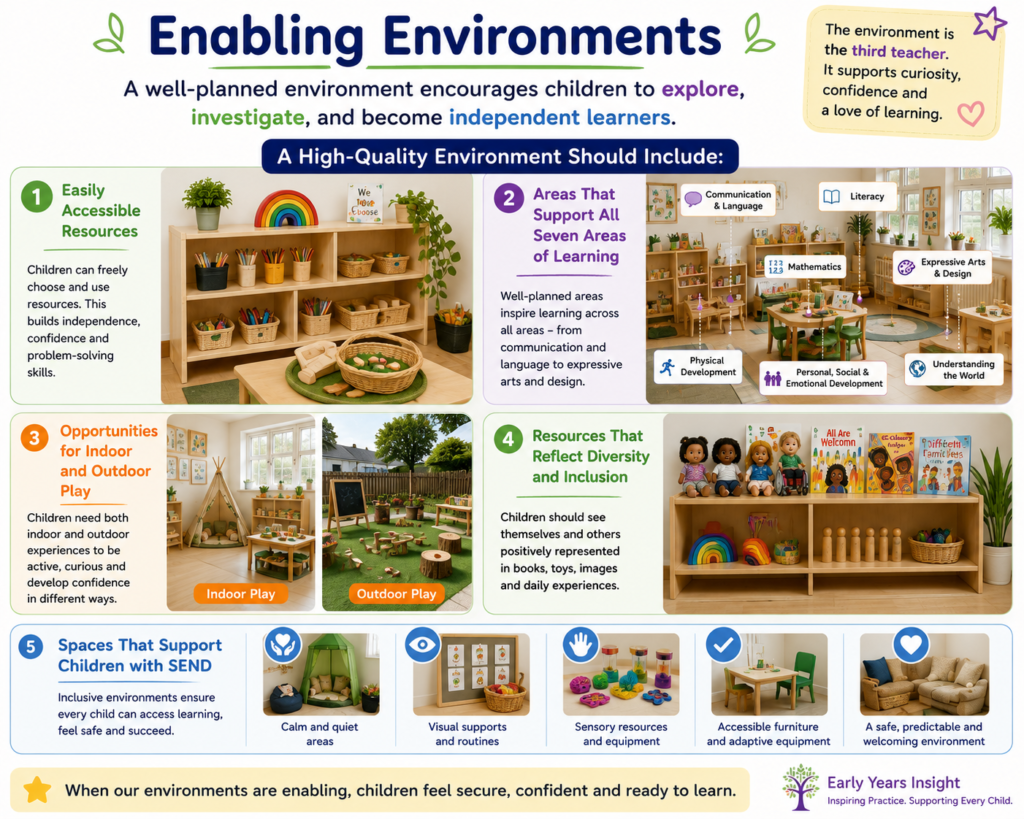
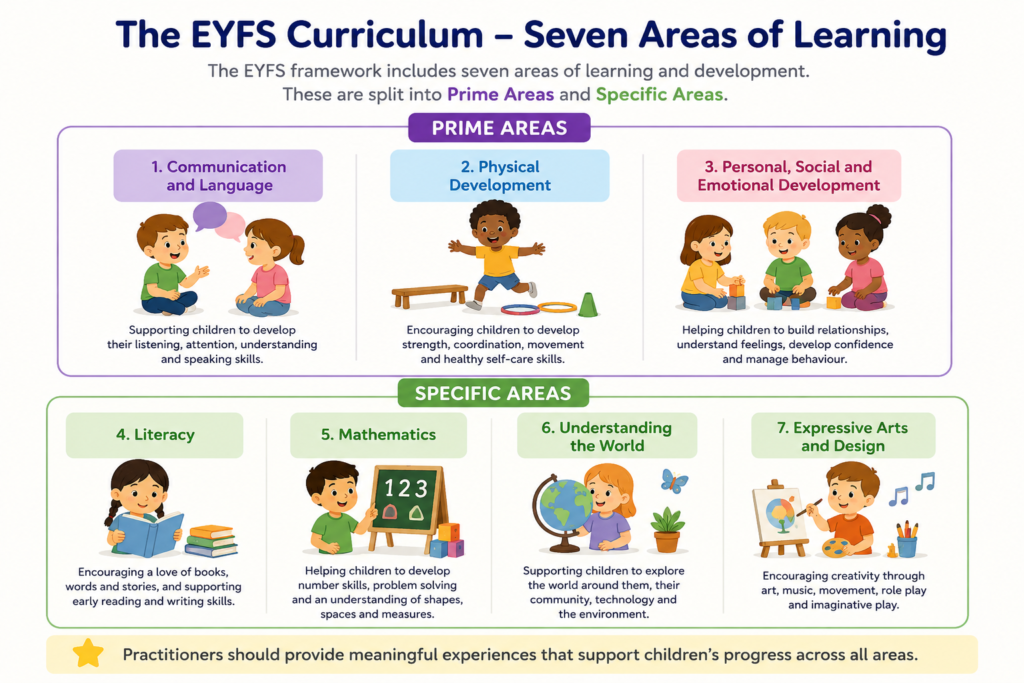
The EYFS is built around four important principles:
Read the official Early Years Foundation Stage (EYFS) statutory framework
1. Every Child Is Unique
2. Positive Relationships
3. Enabling Environments
4. Learning and Development
EYFS 2026: Key Areas of Focus for Early Years Practice
High-quality practice in 2026 continues to focus on:
- A clear and ambitious curriculum.
- Quality interactions between adults and children.
- Strong communication and language development.
- Inclusive support for children with SEND.
- Effective safeguarding procedures.
- Positive behaviour support.
- Children’s emotional wellbeing.
- Strong partnerships with parents.
- Continuous professional development for staff.
What Will Ofsted Look for in Early Years Settings in 2026?
During inspections, Ofsted will look at how effectively a setting supports children’s education, safety, and overall development.
1. Quality of Education
Inspectors will consider how well practitioners understand and deliver their curriculum.
Practitioners should be able to explain:
- What they want children to learn.
- Why particular activities and experiences are provided.
- How activities support children’s next steps.
A strong curriculum is not about completing paperwork; it is about providing meaningful learning experiences every day.
2. High-Quality Adult–Child Interactions
The conversations practitioners have with children play a significant role in their learning.
Excellent interactions include:
- Introducing new vocabulary.
- Asking open-ended questions.
- Giving children time to think and respond.
- Encouraging curiosity and problem-solving.
Visit the official Ofsted guidance for early years providers
Practical Tips for Nursery PractitionersAt Early Years Insight, we believe outstanding practice happens through everyday moments and meaningful interactions.
Extend Children’s Language
Instead of asking only simple questions, encourage children to think and communicate.
Example
❌ Less effective response:
“What colour is your painting?”
✅ High-quality interaction:
“I can see you have used lots of bright colours. Tell me about your picture and what you have created.”
This encourages children to develop confidence, vocabulary, and conversation skills.
Follow Children’s Interests
If a child becomes interested in insects in the garden, practitioners can extend learning by:
- Reading books about insects.
- Counting and comparing insects.
- Drawing what they discover.
- Discussing where insects live.
This creates meaningful learning based on children’s interests.
Encourage Independence
Simple daily routines can develop confidence.
Practitioners can encourage children to:
- Put on their own coats.
- Pour their own drinks.
- Choose resources independently.
- Help tidy the environment.
Supporting Children with SEND Inclusive practice is an essential part of high-quality early years education.
Practitioners should:
- Observe and identify children’s individual needs.
- Work closely with parents and carers.
- Use appropriate strategies and adaptations.
- Collaborate with SENCOs and external professionals.
- Ensure every child feels included and valued.
Real Example from Early Years Practice
A child finds large group activities difficult and becomes distressed during busy times.
An effective practitioner may:
- Provide a calm and quieter space.
- Use visual routines and clear expectations.
- Gradually encourage participation.
- Work with parents to understand successful strategies used at home.
This approach supports the child’s emotional security and inclusion.
Safeguarding: The Foundation of Excellent Practice
Safeguarding should be embedded into everyday practice and not viewed as a task completed only during inspections.
Every practitioner should understand:
- Signs and indicators of possible abuse.
- How to report concerns.
- The setting’s safeguarding procedures.
- Their professional responsibilities.
- The importance of maintaining safe environments.
Behaviour and Emotional Development
Positive behaviour support helps children develop confidence and self-regulation.
Good practice includes:
- Recognising children’s emotions.
- Helping children solve problems.
- Providing clear and consistent expectations.
- Celebrating positive choices.
Working in Partnership with Parents
Parents are children’s first educators, and strong partnerships create the best outcomes for children.
Effective settings:
- Share regular updates.
- Listen to family feedback.
- Discuss children’s achievements and needs.
- Provide guidance to support learning at home.
Leadership and Continuous Professional Development
Strong leaders create a culture of improvement.
Managers should:
- Provide regular staff supervision.
- Identify training needs.
- Encourage reflective practice.
- Monitor the quality of teaching and interactions.
Early Years Insight Recommendations
Based on effective early years practice, Early Years Insight recommends that settings should focus on the following areas:
Make Every Interaction Count
The quality of interactions is often more important than the number of activities provided. Practitioners should observe, listen, respond, and extend children’s thinking.
Create an Inclusive Environment
Every child should see themselves represented within the setting through resources, books, displays, and positive relationships.
Develop a Reflective Team Culture
Regular discussions between staff members can improve practice and ensure everyone understands the setting’s curriculum and expectations.
Keep Safeguarding at the Centre of Practice
Outstanding safeguarding is demonstrated through everyday decisions, professional curiosity, and a culture where children’s welfare always comes first.
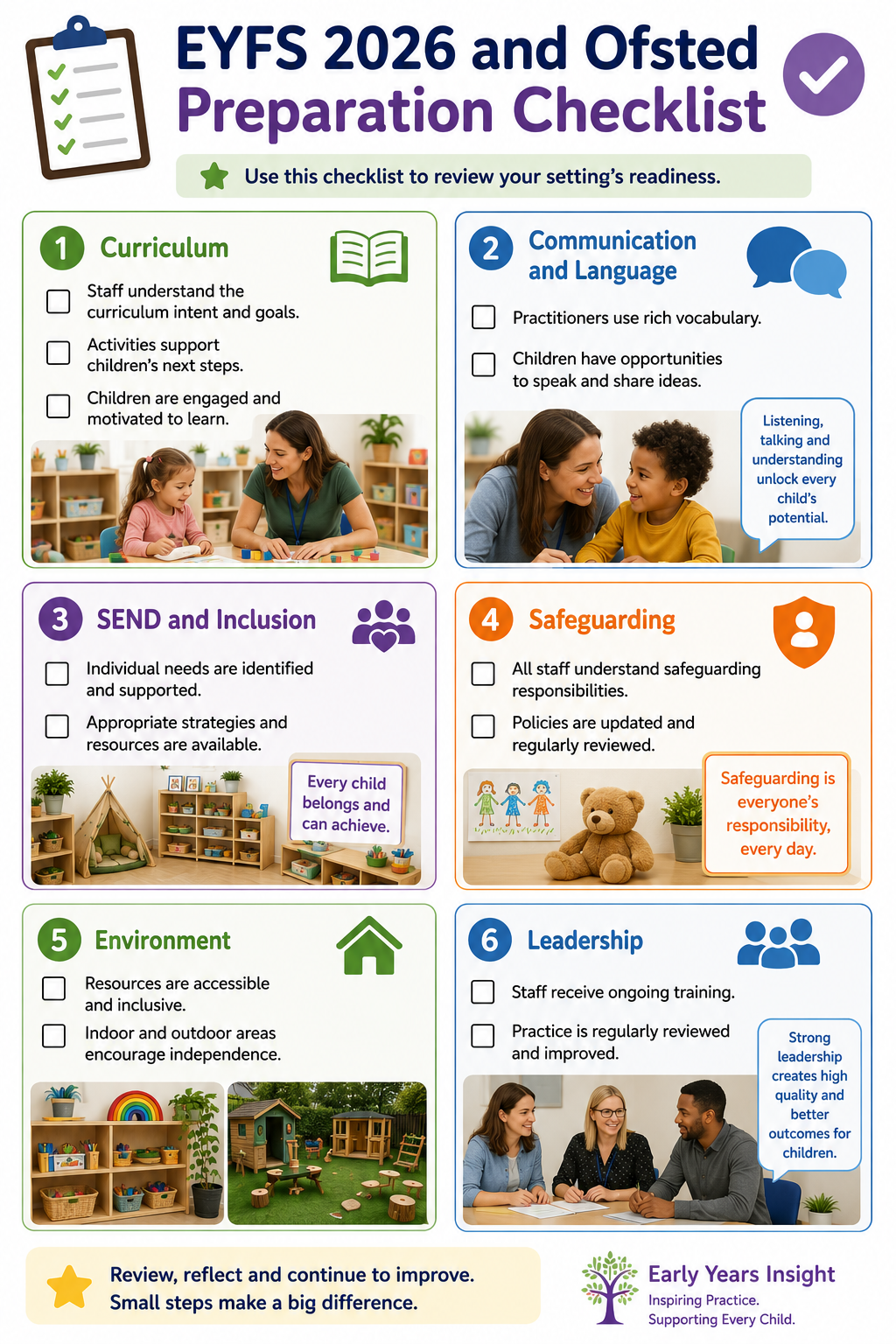
EYFS 2026 and Ofsted Preparation Checklist
Use this checklist to review your setting’s readiness:
Curriculum
☐ Staff understand the curriculum intent and goals.
☐ Activities support children’s next steps.
☐ Children are engaged and motivated to learn.
Communication and Language
☐ Practitioners use rich vocabulary.
☐ Children have opportunities to speak and share ideas.
SEND and Inclusion
☐ Individual needs are identified and supported.
☐ Appropriate strategies and resources are available.
Safeguarding
☐ All staff understand safeguarding responsibilities.
☐ Policies are updated and regularly reviewed.
Environment
☐ Resources are accessible and inclusive.
☐ Indoor and outdoor areas encourage independence.
Leadership
☐ Staff receive ongoing training.
☐ Practice is regularly reviewed and improved.
Reviewing this EYFS 2026 and Ofsted Expectations checklist can help settings identify strengths and areas for improvement.
Read the Ofsted Early Years Inspection Handbook
Frequently Asked Questions (FAQs)
Has the EYFS framework changed in 2026?
Early years practitioners should always keep updated with official government guidance. The key principles of high-quality practice continue to focus on child development, safeguarding, inclusion, and providing meaningful learning experiences.
How can practitioners prepare for an Ofsted inspection?
Practitioners can prepare by understanding their curriculum, maintaining strong safeguarding knowledge, supporting every child’s individual needs, and consistently delivering high-quality interactions.
What makes an outstanding early years setting?
An outstanding setting places children at the centre of everything it does. It provides a strong curriculum, nurturing relationships, an inclusive environment, effective safeguarding, and a culture of continuous improvement.
Final Thoughts from Early Years Insight
At Early Years Insight, we believe excellent early years education is not created through paperwork alone. It is built through meaningful relationships, high-quality interactions, inclusive environments, and a commitment to understanding every child as an individual.
Preparing for EYFS 2026 and Ofsted expectations is about reflecting on daily practice, improving continuously, and ensuring that every child receives the best possible start in life.
By focusing on quality education, safeguarding, SEND inclusion, communication, and strong partnerships with families, early years practitioners can confidently provide exceptional care and learning experiences.
Continue Your Professional Development with Early Years Insight
Explore our other expert guides and free resources: